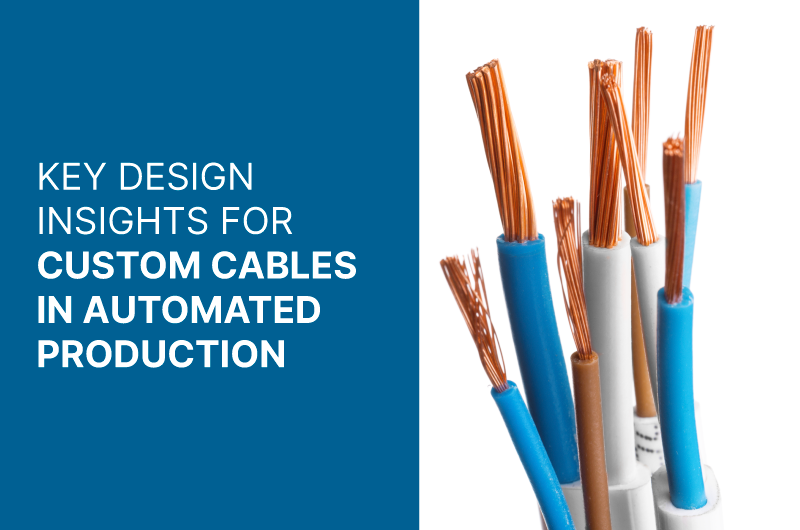
Custom cables for automated production play a crucial role in maximizing the efficiency and reliability of industrial systems. Their unique design addresses specific needs that standard cables cannot satisfy. This article explores key design insights that contribute to the successful implementation of custom cables. It also highlights the importance of cable assembly for industrial automation and the benefits these tailored solutions bring to various applications.
Understanding Custom Cables in Automated Production
Custom cables play a significant role in industrial automation, addressing unique operational requirements that standard solutions cannot handle. Their design and functionality directly contribute to the efficiency and reliability of automated production systems.
Defining Custom Cables
Custom cables are specialized electrical cable configurations that are engineered to meet specific project requirements. Unlike standard cables, which are designed for general use, custom cables are tailored to address unique challenges within various applications. These challenges could include exposure to high temperatures, electromagnetic interference, and specific industry regulations. The design process involves selecting appropriate materials, shielding, connector types, and other elements that ensure performance and reliability.
Importance in Industrial Automation
In the realm of industrial automation, the importance of custom cables cannot be overstated. They enable the seamless integration of various automated systems, ensuring that equipment operates reliably and efficiently. Key benefits include:
- Enhanced Performance: Custom cables are optimized for their specific application, leading to increased operational efficiency.
- Reliability: The ability to withstand environmental stresses contributes to reduced downtime and maintenance costs.
- Precision: Tailored solutions minimize the risk of electrical noise, significantly improving the performance of sensitive equipment.
Comparing with Off-the-Shelf Solutions
When evaluating custom cables, it is essential to compare them with off-the-shelf solutions. Standard cables are often less expensive and quicker to obtain, but they may not fit the specific demands of certain applications. Key differences include:
- Customization: Custom cables are designed to meet specific voltage ratings, current capacities, and environmental needs, while off-the-shelf cables offer limited flexibility.
- Performance Optimization: Custom solutions are engineered to address specific installation challenges and can lead to better performance than generic options.
- Compliance: Industry-specific regulations often require tailored solutions that off-the-shelf products may not satisfy, making custom cables a necessity for compliance.
The Design Process for Custom Cables
The design process of custom cables is a meticulous undertaking, ensuring that the final product meets the specific needs of automated production environments. This process involves several stages that collectively contribute to the performance and reliability of the cables.
Requirement Analysis
Establishing precise requirements is essential for creating effective custom cables. This phase sets the foundation for all subsequent design steps.
Identifying Voltage and Current Needs
Understanding the voltage and current requirements is crucial for determining the appropriate conductor size and configuration. Each application has unique electrical demands, which influence conductor material and design.
Assessing Environmental Conditions
Analyzing the environment in which the cables will be installed is vital. Conditions such as temperature extremes, exposure to chemicals, and potential physical stresses must be considered to select appropriate materials and designs.
Material Selection
Choosing the right materials directly impacts the durability and performance of custom cables. This stage focuses on aspects that enhance cable efficiency and compliance with industry standards.
Choosing Conductors and Insulation
Common conductor materials include copper for conductivity and aluminum for lightweight applications. The selection of insulation materials like PVC, polyethylene, and fluoropolymers depends on the specific environmental threats that the cable will face, such as moisture and temperature.
Shielding and Grounding Techniques
To mitigate electromagnetic interference (EMI) and radio frequency interference (RFI), employing effective shielding techniques is necessary. Options could include foil, braided, or twisted pair configurations, each selected based on the level of interference expected in the installation environment.
Construction Design
This phase focuses on the structural aspects of the cable. The decisions made here significantly affect cable flexibility, robustness, and compatibility with installation requirements.
Determining Conductor Count
The number of conductors required can greatly influence the cable’s design. A careful evaluation of functionality and spatial constraints will guide this decision, ensuring that the cable maintains the necessary performance without excessive bulk.
Armor and Jacket Design
In environments where cables may experience physical stress, armor can be integrated into the design. The outer jacket also plays a vital role in protecting the inner components from environmental and mechanical damage, ensuring longevity and stability.
Prototyping and Testing
After the design is finalized, the creation of prototypes allows for practical evaluation. Testing verifies that the cable meets the specified performance criteria.
Evaluating Electrical Performance
This testing phase checks the cable’s performance against electrical specifications for current and voltage. Ensuring that these metrics are met is key to maintaining operational efficiency.
Assessing Mechanical Strength
Mechanical testing evaluates the cable’s resistance to physical stressors, such as bending, pulling, and environmental influences. This assessment guarantees that the cable can withstand the challenges of its intended operational environment.
Design Considerations for Automated Production
Creating custom cables for automated production requires careful consideration of various factors that can impact overall functionality and performance. Each aspect of design must be aligned with the specific demands of automated systems.
Sensitive Equipment Protection
In environments where sensitive equipment operates, the protection of electronic systems is paramount. This involves addressing potential interference that can disrupt normal operations.
Addressing EMI and RFI
Electromagnetic interference (EMI) and radio frequency interference (RFI) pose significant challenges in automated production settings. Custom cables can be designed with advanced shielding techniques to minimize these interferences. Techniques include:
- Utilization of twisted pair configurations to balance electrical fields.
- Application of foil and braided shielding materials to enhance impedance control.
- Implementation of coaxial cable designs for specific signal integrity needs.
Power and Data Transmission Needs
Automated systems often require specialized cables to efficiently manage power and data transmission. The design must cater to varying voltage and current demands.
High Power Configurations
Custom cables must be capable of handling specific power configurations to ensure reliable performance. This includes selecting appropriate conductor gauge and insulation material based on:
- Expected load and operational frequency.
- Potential for heat generation during operation.
Signal Integrity Solutions
Maintaining signal integrity is critical in automated production. Custom cables that offer:
- Shielded cabling to reduce cross-talk between conductors.
- Specific impedance matching to optimize data transfer rates.
These elements are essential for effective communication in various automated applications.
Meeting Environmental Challenges
The operational environment can significantly affect cable performance. Cables need to be resistant to various factors that could lead to premature failure.
Materials for Extreme Conditions
Choosing the right materials is crucial for durability. This includes:
- Utilizing thermoplastic elastomers for flexibility in low temperatures.
- Employing UV-resistant materials to withstand outdoor installations.
- Selecting chemical-resistant jackets for environments exposed to corrosive substances.
Compliance with Industry Standards
Adhering to industry-specific standards is not just a regulatory requirement but also enhances trust in cable performance.
Specific Industry Requirements
Various sectors dictate specific compliance standards, which can include:
- Fire resistance ratings for aerospace and military applications.
- Moisture resistance for medical facility cables.
- Temperature ratings for industrial machinery.
Understanding these requirements from the outset aids in the efficient design of custom cables.
Custom cables provide numerous advantages that significantly enhance the performance of automated production systems. Understanding these benefits is crucial for optimizing operations and ensuring reliability in various industrial applications.
Benefits of Custom Cables for Automated Production
Enhanced Reliability and Efficiency
One of the standout advantages of custom cables is their ability to enhance both reliability and efficiency in automated production environments. These cables are designed specifically to meet the unique demands of their operational context. By minimizing the chances of failure, they contribute to fewer disruptions in production lines.
- Custom cables are tailored to specific voltage and current requirements, ensuring they function optimally without overheating or degrading over time.
- They can include advanced shielding techniques to protect against electromagnetic interference (EMI) and radio frequency interference (RFI), thereby maintaining signal integrity.
- Longevity is another key feature; specialized materials and constructions minimize wear and tear, extending the lifespan of the cable systems significantly.
Space and Cost Optimization
Another significant benefit of employing custom cables is the ability to optimize both space and costs. In environments where every square inch counts, having cables that fit precisely can lead to more efficient layouts.
- Custom designs can be made to fit available space constraints without sacrificing performance, allowing for more streamlined machinery arrangements.
- By reducing excess material, custom cables minimize waste, leading to lower overall material costs and more cost-effective manufacturing processes.
- The precise fit of custom cables often means fewer installation challenges and increased ease of routing, which can save valuable labor time during setup.
Adaptability in Harsh Environments
Automated production systems often operate in challenging conditions, where temperature fluctuations, exposure to chemicals, and mechanical stresses are common. Custom cables offer remarkable adaptability that enhances their performance under these conditions.
- Designed specifically to withstand extreme temperatures, custom cables employ insulation materials that can endure heat and cold, thus maintaining operational integrity.
- Various environments may require resistance to chemicals and moisture; custom cables can utilize materials that prevent corrosion and damage from exposure, ensuring operational reliability.
- Flexibility can be built into custom cable designs, allowing them to perform optimally in environments where movement is a factor, such as robotics and automated assembly lines.
Custom cable assemblies play a pivotal role across various industries, providing specialized solutions tailored to specific application requirements. The versatility of these custom cables extends into numerous sectors, enhancing operational efficiency and ensuring reliable connectivity.
Applications of Custom Cable Assemblies in Various Industries
Industrial Automation Systems
In industrial settings, custom control cables are integral to efficient system operations. These cables are designed to meet rigorous standards for signal integrity and performance.
Custom Control Cables
Control cables in industrial automation ensure seamless communication between machinery and control systems. Their design often includes features that accommodate various voltages and environmental conditions, ensuring functionality even in demanding scenarios. Enhanced shielding techniques help mitigate electromagnetic interference (EMI), securing reliable signals during operation.
Renewable Energy Solutions
The renewable energy sector, particularly solar and wind power, relies heavily on custom cable assemblies that withstand challenging environmental conditions. The cables must endure exposure to UV light, moisture, and temperature fluctuations while maintaining performance.
Solar and Wind Installations
Custom cables for solar arrays are often constructed with materials that resist degradation from sunlight, ensuring longevity and efficiency. Similarly, wind turbine installations require robust cable assemblies capable of handling the mechanical stresses associated with high winds and dynamic movements, ensuring a sustainable energy supply.
Telecommunications and Data Transfer
Custom cable assemblies also find significant application within the telecommunications industry, where data integrity and transmission reliability are paramount.
Ensuring Robust Connectivity
Telecommunication cables must support high-speed data transfer without signal degradation. Specialized designs, such as twisted pairs or fiber optic cables, are crucial for maintaining robust connectivity and minimizing data loss. Adhering to industry standards is vital in this sector to ensure compatibility and reliability across communication networks.
Medical and Aerospace Applications
Within the medical and aerospace fields, the demand for high-precision custom cabling has grown. These applications require adherence to stringent safety and performance regulations.
High-Precision Custom Cabling
Custom cables in medical devices must facilitate both power and data transfer while ensuring patient safety. In aviation, cables are designed to perform optimally under extreme conditions and often undergo rigorous testing to meet airworthiness standards. The use of specialized materials enhances performance, ensuring they can withstand thermal extremes and mechanical stresses while providing dependable service.
Selecting the Right Manufacturer for Custom Cable Solutions
Choosing the appropriate manufacturer for custom cable solutions is crucial for ensuring the success of a project. Various factors contribute to assessing potential design partners, with particular emphasis on quality standards, testing protocols, and the manufacturer’s overall reputation in the industry.
Evaluating Quality Standards
A manufacturer’s adherence to quality standards plays an essential role in product reliability and performance. Detailed evaluations can encompass a variety of aspects:
- **Certification Accreditations:** Verify if the manufacturer holds relevant industry certifications, such as ISO 9001, which indicates consistent quality management systems.
- **Material Sourcing:** Assess the quality of raw materials used in cable production, as high-grade materials directly influence the final product’s durability and functionality.
- **Compliance Standards:** Ensure that the manufacturer complies with applicable local and international standards for safety and performance, enhancing the credibility of their products.
Importance of Quality Control and Testing
Quality control measures and testing protocols are critical in the custom cable manufacturing process. A reputable manufacturer will implement rigorous testing at various stages:
- **In-Process Inspections:** Regular checks during manufacturing help identify potential defects early in the process.
- **Final Testing:** Comprehensive evaluations conducted on finished products ensure compliance with electrical performance metrics, mechanical strength, and environmental resistance.
- **Life Cycle Analysis:** Some manufacturers may offer extended testing to determine the long-term sustainability and reliability of the cables under simulated environmental conditions.
Manufacturer Reputation and Expertise
Assessing a manufacturer’s reputation within the industry provides valuable insights into their reliability and customer satisfaction. Factors to consider include:
- **Industry Experience:** A manufacturer with years of experience is likely to have a deeper understanding of the challenges and requirements related to custom cable production.
- **Customer Reviews and Testimonials:** Feedback from previous clients can highlight strengths and weaknesses, offering a clearer picture of the manufacturer’s service quality.
- **Technical Support and Consultation Services:** A commitment to customer service through accessible technical support can cater to specific project needs while enhancing overall collaboration.
In conclusion, selecting the right manufacturer for custom cable solutions necessitates thorough evaluation across various facets, including quality standards, meticulous quality control, and an understanding of the manufacturer’s reputation. These variables collectively ensure that the custom cables meet the stringent requirements of automated production environments.
If you would like to receive a quote for any of custom cables or connectors, please do not hesitate to contact us by sending an email to sales@readytogocables.com or calling in the USA this phone number (682-325-1944).