RS-232 cables in automation have been a foundational element in industrial communication for decades. Despite the emergence of newer technologies, these cables continue to play a significant role in various automation systems. This article explores the current relevance of RS-232 cables, highlighting their evolution, technical features, and applications in modern industrial settings. Understanding their advantages and limitations provides insight into their ongoing use within industrial communication protocols.
History and Evolution of RS-232
The RS-232 standard has a rich history that reflects the evolution of data communication technology. Initially established in the early 1960s, this protocol laid the foundation for serial communication, allowing diverse devices to exchange information effectively.
Invention and Initial Adoption
RS-232 was developed by the Electronic Industries Association (EIA) to facilitate serial data communication between data terminal equipment (DTE) and data communication equipment (DCE). Its introduction marked a significant breakthrough in how systems interacted. The first version was released in 1960, and soon after, it became the standard for connecting devices like modems, printers, and computers.
The simplicity of the RS-232 standard contributed to its rapid adoption across various sectors. Devices of that era required a reliable means of communication for data transfer, and RS-232 met these needs effectively. Its user-friendly design allowed engineers to implement it without extensive training, making it an attractive option for many applications.
Changes Over the Decades
Over the years, RS-232 has undergone several revisions to accommodate advancements in technology and evolving industry standards. For instance, the standard was redefined multiple times, with the most relevant revision being TIA-232-F, published in 1997, which included improved electrical characteristics and connection specifications.
- Improvements in electrical signaling and voltage levels.
- Introduction of the D-subminiature connector, enhancing connectivity.
These modifications were essential as technology progressed, but despite the introduction of newer interfaces like USB and Ethernet, RS-232 maintained its foothold. This is partially because many existing systems continued to leverage its simplicity and reliability, as organizations sought to maximize their investments in legacy systems.
Modern Relevance in Industrial Settings
In contemporary industrial applications, RS-232 remains relevant, particularly in automation systems. Many devices that operate under harsh conditions still rely on RS-232 for stable communication. The robustness of this standard makes it well-suited for environments prone to electrical noise, where other methods may fail.
Furthermore, RS-232’s ability to communicate over short distances adds to its appeal in industrial environments. Industries such as manufacturing, healthcare, and research often utilize this technology to ensure continuous, reliable data exchange between machines and sensors.
As newer communication protocols emerge, RS-232’s distinctive advantages—such as low implementation costs and ease of installation—help retain its relevance in specific scenarios. While RS-232 may not match the speed of modern interfaces, its continued use underscores the importance of adaptability and effectiveness in automation processes.
Technical Features of RS-232
The RS-232 standard boasts a range of technical features that ensure effective serial communication between devices. Understanding these features is essential for comprehending how RS-232 continues to play a role in automation and industrial communication.
Electrical Characteristics and Voltage Levels
The electrical specifications of RS-232 define its operational limits, which are crucial for reliable data transmission. By ensuring compatibility among different devices, these characteristics help maintain effective communication.
- The standard operates with voltage levels ranging from ±3 to ±25 volts. This range enables devices to differentiate between logical high and low states.
- Transmission speeds can vary, traditionally supporting bit rates up to 20,000 bits per second. However, specific implementations can achieve higher rates depending on the device’s capabilities.
- Signal integrity is maintained through defined signal levels and a minimum pulse width, reducing the likelihood of data corruption in noisy environments.
Signal Types and Data Flow Control
RS-232 employs various signal types that facilitate effective communication between devices. These signals instruct devices on how to manage data transmission and reception.
- Data signals represent the actual binary data being transmitted. They are essential for the functioning of devices in automation and control systems.
- Control signals, such as Request to Send (RTS) and Clear to Send (CTS), govern the flow of data to prevent collisions and ensure orderly communication.
- Flow control mechanisms, which can be either hardware-based or software-based, help manage data transmission rates, thus preventing data loss during busy transmission periods.
Connectors and Cables Used
The physical aspects of RS-232 encompass connectors and cables essential for establishing reliable connections between devices. The choice of connectors and cables can influence the performance and compatibility of the system.
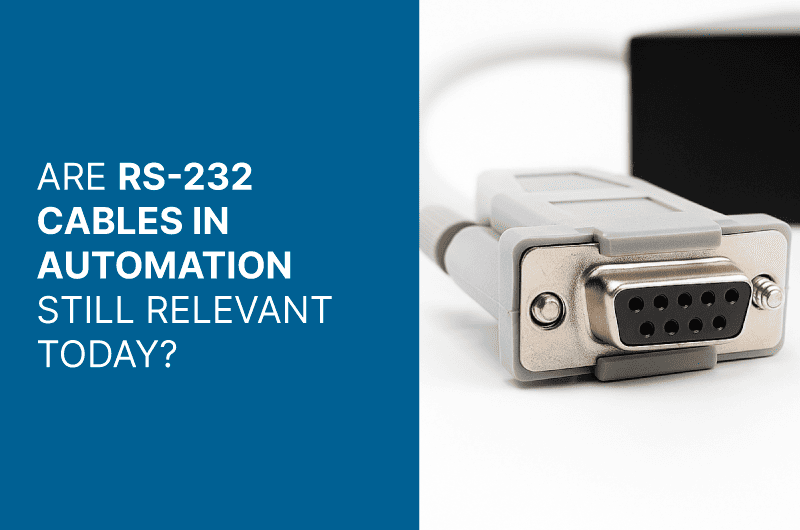
- Commonly, RS-232 uses D-subminiature connectors, which became a standard in the late 1980s, facilitating a widespread adoption across various devices.
- Cable types include twisted pair and shielded cables, which help to minimize electromagnetic interference and ensure data integrity over longer distances.
- Connector configurations typically consist of 9-pin or 25-pin layouts, determined by the specific application and device compatibility.
RS-232 in Industrial Applications
RS-232 cables continue to play a significant role in various industrial applications, providing a reliable means of communication for a range of devices and systems.
Role in Automation Systems
In the realm of automation, RS-232 cables serve as a critical link between various components, enabling efficient data interchange. The simplicity of this interface allows for easy integration within existing systems.
Integrating with Programmable Logic Controllers (PLCs)
Programmable Logic Controllers (PLCs) are widely used in industrial settings for automation tasks, and RS-232 cables facilitate their communication with peripheral devices. This connection is crucial for controlling machinery, monitoring system performance, and executing programming commands.
Using RS-232 with PLCs allows technicians to:
- Retrieve data for analysis and reporting.
- Send control commands to field devices.
- Update configuration settings during maintenance.
Use in Communication Between Devices
Communication between devices is essential for seamless automation processes. RS-232 enables this communication by connecting sensors, actuators, and controllers in a straightforward manner.
This protocol supports various configurations, allowing devices to transmit data reliably across short distances while maintaining synchronization and data fidelity. The plug-and-play nature of RS-232 makes it particularly advantageous in environments where rapid integration is necessary.
Compatibility with Legacy Systems
Legacy systems often rely on pre-existing communication interfaces, making RS-232 an ideal choice for many industrial environments. The backward compatibility of RS-232 ensures that older equipment can easily interfacing with newer technologies without substantial modifications.
By leveraging RS-232, facilities can continue operating existing machinery while adopting new equipment, thereby optimizing capital investment and ensuring operational continuity.
Reliability and Stability in Harsh Environments
In industrial environments, reliability is crucial, particularly where equipment is exposed to electrical noise and other challenges. RS-232 has demonstrated robustness in these conditions, making it a preferred choice for many applications.
Managing Data Integrity
Maintaining data integrity during transmission is a core advantage of RS-232 technology. The protocol’s design includes mechanisms for error checking, allowing devices to detect and correct errors in real-time. This feature is especially important in applications where accurate data transmission is vital for system performance and safety.
Signal Degradation Prevention
Signal degradation can significantly affect communication quality in industrial settings. RS-232 cables are crafted to minimize this degradation, enabling clear signals over short distances. Proper shielding and cable management practices further enhance the resilience of RS-232 against electromagnetic interference.
The adoption of high-quality connectors and cables enhances the overall performance, ensuring that RS-232 communication remains unaffected even in challenging conditions.
Advantages of RS-232 Over Modern Technologies
The RS-232 standard offers several distinct advantages that make it a preferred choice in certain industrial contexts, even when compared to newer technologies. Understanding these benefits helps clarify why RS-232 maintains relevance in automation systems.
Simplicity and Ease of Use
One of the standout features of RS-232 is its straightforward design. This simplicity allows technicians and engineers to easily set up and maintain connections between devices. The protocol uses a minimalistic approach to data transmission, which means less complexity during installation and troubleshooting.
- The straightforward nature of RS-232 promotes faster learning curves for new technicians.
- Commonly available connectors eliminate the need for specialized hardware or extensive resources.
- Implementation requires less software support, simplifying the entire process.
Moreover, the low number of required components streamlines communication, reducing potential points of failure. This makes RS-232 an appealing choice for industries favoring simplicity over advanced features.
Cost-Effectiveness in Industrial Communication
RS-232 provides a cost-efficient solution for many applications in automation. The hardware, including cables and connectors, is widely available and inexpensive compared to newer technologies like USB or Ethernet. This affordability extends to installation costs and ongoing maintenance, making it an attractive option for budget-conscious organizations.
- Lower equipment costs lead to reduced capital expenditures in retrofitting or upgrading systems.
- The reliability of RS-232 results in minimized downtime and repair costs.
- Organizations can leverage existing infrastructure, avoiding hefty investments in new systems.
The economic advantages of deploying RS-232 speak to its enduring role, particularly in environments where budget constraints are a primary concern.
Comparison with USB and Ethernet
While USB and Ethernet have undoubtedly transformed data communication, they come with their own set of challenges that RS-232 sidesteps. USB, for instance, offers faster data transfer rates but often requires complex drivers and configurations, complicating the user experience.
- RS-232 does not necessitate complex drivers, making it easier to implement in various devices.
- The reliability of RS-232 in harsh environments often outweighs the high-speed capabilities of USB.
- Unlike Ethernet, RS-232 facilitates direct point-to-point connections, which can simplify certain operations.
For many industrial applications where high speed is not as critical as stability and simplicity, RS-232 continues to hold its ground effectively compared to these modern alternatives.
Common Use Cases of RS-232 Cables
RS-232 cables find diverse applications across various industries, showcasing their enduring significance and functionality in both modern and traditional systems.
Industrial Automation Systems
In the realm of industrial automation, RS-232 cables are pivotal for connecting and communicating among various devices, ensuring seamless control and monitoring. They facilitate effective data exchange between control systems and operational machinery.
Typically, these cables are employed to connect programmable logic controllers (PLCs) with input and output devices, such as sensors and actuators. This integration enables real-time data processing and decision-making.
- Integrating with Programmable Logic Controllers (PLCs)
Utilization of RS-232 in connecting PLCs encompasses wiring configurations that enable continuous data flow. This connectivity is essential for controlling automated processes, allowing PLCs to receive inputs from devices and execute commands accordingly. - Use in Communication Between Devices
RS-232 cables facilitate communication between various industrial devices. Whether it’s a connection to a computer or a more complex machine, these cables support efficient and reliable data transfer. They ensure that all components in an automation system can share information effectively.
Data Transmission Between Devices
Another common use case for RS-232 cables is in data transmission between devices. This protocol allows for the reliable transfer of information in various forms, including configuration data, operational commands, and status updates. The continuous stream of data ensures optimal performance of the entire system.
- Communicating with Peripheral Devices
RS-232 cables are frequently employed to connect peripheral devices such as printers, scanners, and HMIs (human-machine interfaces). This capability allows for efficient data exchange, which is crucial in maintaining operations in industrial environments. - Monitoring and Data Logging
In many applications, RS-232 cables help in monitoring machine performance and data logging over time. This functionality is vital for ensuring machinery operates within specified parameters and for facilitating preventive maintenance.
Serial Communication Transmission in Short Distance Communication
RS-232 is particularly well-suited for short-distance communication, typically up to 50 feet, depending on device specifications and environment. This feature makes RS-232 ideal for applications where devices are in close proximity.
- Connecting Equipment in a Localized Setup
In manufacturing floors or research labs, RS-232 cables connect machines and devices that are located nearby. This setup minimizes latency and maximizes efficiency in data exchange processes. - Isolated Communication for Safety and Performance
Using RS-232 for short-distance connections helps to isolate devices from potential interferences. In sensitive environments, controlling communication pathways reduces the risk of data corruption and enhances operational reliability.
Limitations and Challenges of RS-232
While RS-232 cables are still widely used in industrial applications, they do face significant limitations and challenges that can affect their performance and viability in certain situations.
Speed and Data Transmission Rates
One of the primary concerns regarding RS-232 technology is its relatively low data transmission speed. Originally designed for communication at baud rates up to 20,000 bits per second, the actual performance in practical applications often varies.
Many modern systems demand higher speeds due to the increasing volume of data that needs to be processed and transmitted effectively. As a result, RS-232 typically struggles to meet these requirements when compared to newer technologies. The limitations of RS-232 can hinder its usefulness in scenarios demanding faster data rates, such as high-speed signaling in automation processes or real-time data analysis.
Short Distance Limitations
Another significant limitation of RS-232 lies in its inability to support long-distance communication. The maximum cable length for RS-232 connections is generally around 50 feet (15 meters), which is often insufficient for larger industrial setups or when connecting devices that are widely spaced apart.
This short-distance constraint poses challenges in expansive environments where maintaining communication integrity over longer distances is essential. As such, users may need to deploy additional hardware solutions, like signal repeaters, which can complicate setups and increase overall costs.
RS-232 vs. RS-485 and Ethernet
When comparing RS-232 to other communication protocols such as RS-485 and Ethernet, it becomes evident that RS-232 has its constraints. RS-485, for instance, is designed for long-distance communication and can connect multiple devices on the same bus, offering superior flexibility and scalability.
- RS-485 can reach lengths of up to 4,000 feet (1,200 meters) and operates at higher data rates.
- Ethernet technologies provide network capabilities and support for complex data exchange, making them more suitable for modern automation needs.
These newer protocols address many of the inherent weaknesses of RS-232, enabling more effective data sharing, enhanced speed, and an overall better architecture for industrial communication networks. The choice to use RS-232 may ultimately come down to specific application needs and existing infrastructure.
RS-232 in the Future of Industrial Communication
As industries evolve and embrace newer technologies, the role of RS-232 cables continues to transition within the landscape of industrial communication. Their adaptability and historical significance make them relevant even in contemporary applications.
Innovations and Adaptations
The RS-232 standard has not remained stagnant; rather, it has seen adaptations that enhance its utility in modern contexts. Updated versions of RS-232 now accommodate higher data rates and improved electrical characteristics, offering greater flexibility in diverse environments.
Some key innovations surrounding RS-232 include:
- Enhanced signal processing techniques that reduce noise interference, increasing reliability in industrial settings.
- Incorporation of converters that allow RS-232 to interface seamlessly with USB and Ethernet, making integration more versatile.
- Durable cable materials designed to withstand harsh conditions, ensuring longer service life in industrial applications.
Integration with Other Industrial Communication Protocols
In today’s interconnected systems, the ability to communicate across various protocols is essential. RS-232 can work effectively with several industrial communication protocols:
- RS-485: Known for multi-point systems, it complements RS-232 by extending communication distances and increasing device capacity.
- Modbus: Often used in automation settings, Modbus allows connecting devices such as PLCs and sensors with RS-232 serving as the communication bridge.
- TCP/IP: With the emergence of IoT in industrial applications, RS-232 can facilitate connections to TCP/IP networks through gateways, enabling remote data access and control.
This interoperability enhances the functionality of RS-232 cables, allowing them to coexist with other modern technologies while maintaining their functionality.
Long-term Viability in Modern Industrial Applications
Despite technological advancements, RS-232 cables are anticipated to retain a place in industrial communication for the foreseeable future. Their simple design and robust performance are particularly suited for various applications.
Factors supporting the long-term viability of RS-232 include:
- Many legacy systems still rely on RS-232, ensuring continued use within industries heavily invested in existing technology.
- As cost-effective solutions, industries prefer RS-232 for non-complex data transmission needs, where higher speeds are unnecessary.
- Availability of components and support materials ensures that maintenance and upgrades are feasible without prohibitive costs.
This foundational role in industries like manufacturing, healthcare, and scientific research underlines the enduring relevance of RS-232 cables. Their presence continues to be a practical choice in communication setups that prioritize reliability and ease of implementation.
If you would like to receive a quote for any of custom cables or connectors, please do not hesitate to contact us by sending an email to sales@readytogocables.com or calling in the USA this phone number (682-325-1944).