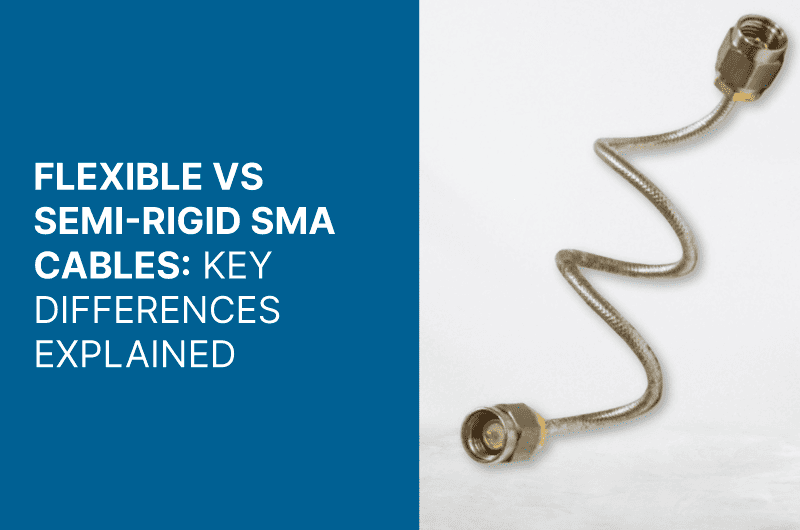
Flexible vs semi-rigid SMA cables are essential components in RF design, each with unique characteristics. This article will explore their differences in flexibility, performance, and optimal use cases. Understanding these cables’ features is crucial for selecting the right one for various applications. Insights into custom SMA cables will also be discussed, highlighting how specific designs cater to unique requirements.
Understanding Flexible vs Semi-Rigid SMA Cables
In the realm of RF design, the choice between flexible and semi-rigid SMA cables is fundamental. Each type offers distinct advantages based on their construction and intended applications.
Design and Material Differences
The design and material construction of SMA cables play a critical role in their performance characteristics. While both types utilize similar components, their differences significantly affect functionality and usability.
Outer Conductor and Inner Conductor Variations
The outer conductor of flexible SMA cables typically consists of either braided strands or a single-layer shield. This construction allows for enhanced flexibility, making these cables ideal for tight spaces and intricate routing. In contrast, semi-rigid cables feature a solid outer conductor, which provides structural stability. This rigidity is beneficial for applications requiring minimal movement, as it maintains a consistent path for signal transmission.
Dielectric Material Impact on Cable Performance
The choice of dielectric material is another critical factor influencing cable performance. Flexible SMA cables often use materials such as foam polyethylene or low-loss PTFE. These materials facilitate better signal transmission, minimizing attenuation. On the other hand, semi-rigid SMA cables typically employ more robust dielectrics, which contribute to improved signal integrity and lower loss over longer distances, especially in high-frequency applications.
Construction of Flexible Cable Assemblies
Construction techniques for flexible SMA cables prioritize adaptability. The assembly process often involves using a flexible dielectric material wrapped in a protective layer. This allows for easy bending and routing without compromising the cable’s electrical performance. The customizable nature of these assemblies means they can be tailored for specific applications, making them a popular choice in environments where space and movement are considerations.
Construction of Semi-Rigid Cable Assemblies
Semi-rigid SMA cables are constructed with a focus on durability and precision. The assembly typically includes a hard dielectric material that is shaped or bent at specific angles to create a reliable path for signal flow. This rigid structure ensures minimal signal loss and phase distortion, making semi-rigid assemblies suitable for high-precision tasks. The construction process often involves meticulous bending and cutting techniques to maintain these qualities without compromising performance.
Performance Comparison of Flexible and Semi-Rigid SMA Cables
When assessing the performance of flexible and semi-rigid SMA cables, several critical factors come into play. These include signal loss, phase stability, frequency range, and the effects of cable rigidity on power handling. Each type of cable exhibits unique characteristics that cater to specific applications and contexts.
Signal Loss and Attenuation Characteristics
Signal loss is a paramount consideration in RF applications. Both flexible and semi-rigid SMA cables face challenges in maintaining signal integrity, but their performance in this regard differs significantly.
Low Loss Features in Semi-Rigid Cables
Semi-rigid SMA cables are designed with specific construction techniques that minimize signal loss. The tightly controlled dimensions contribute to lower attenuation rates, allowing high-frequency signals to travel with greater efficiency. This makes them ideal for applications requiring high precision and low signal degradation.
Loss Factors in Flexible Coaxial Cables
In contrast, flexible SMA cables tend to experience higher levels of signal loss, primarily due to their construction. The materials used and the additional flexibility can introduce inconsistencies in impedance, which often results in increased attenuation. These factors must be carefully considered when selecting the appropriate cable for a specific application.
Phase Stability and Precision in SMA Cable Assemblies
Phase stability is vital for applications demanding accurate phase relationships, such as in communication systems and signal processing. Semi-rigid SMA cables provide superior phase stability due to their inherent rigidity. Their consistent geometry results in less phase variation across frequency ranges, essential for maintaining signal quality.
On the other hand, flexible SMA cables may suffer from phase instability, particularly when subjected to bending or twisting during installation. This could lead to unwanted interference and distortion in the signal, emphasizing the importance of selecting the correct type of cable based on installation scenarios.
Frequency Range and High-Frequency Applications
Both flexible and semi-rigid SMA cables can be utilized in high-frequency applications. However, their performance varies significantly. Semi-rigid cables are better suited for RF environments that demand higher frequency ranges due to their reduced losses and improved performance characteristics.
Flexible cables, while capable of handling various frequencies, may struggle to maintain performance at the upper limits of their range. Their design and material limitations can result in decreased effectiveness when handling high-frequency signals, making them less suitable for critical applications requiring high stability.
Impact of Cable Rigidity on Power Handling
The rigidity of a cable plays a significant role in its power handling capabilities. Semi-rigid SMA cables excel in this area due to their robust construction, allowing them to handle higher power levels without compromising performance. This makes them ideal for applications that demand reliability under significant power loads.
Flexible SMA cables, although versatile in routing layouts, may be limited in their power handling capabilities. Flexibility can lead to bending-induced losses and overheating under high power conditions. These limitations highlight the importance of understanding the specific demands of an application when choosing between flexible and semi-rigid SMA cables.
Applications Best Suited for Flexible vs Semi-Rigid SMA Cables
Effective application of SMA cables is crucial in various industries, defined by unique requirements and installation challenges. Understanding where flexible and semi-rigid SMA cables shine helps engineers make better choices tailored to specific tasks.
Flexible SMA Cables for Complex Routing and Installations
Flexible SMA cables are particularly advantageous in environments requiring intricate routing. Their adaptability allows for easier installation in confined spaces or setups that demand tight bends. This characteristic helps in minimizing signal loss due to mismatched cable configurations. They are often used in:
- Mobile devices
- Dynamic measurement systems
- Applications with constant movement or vibration
The ability to maneuver around obstacles makes flexible SMA cables ideal for custom systems where layout can be unwieldy.
Semi-Rigid SMA Cables for Stable and High-Precision Tasks
In contrast, semi-rigid SMA cables excel in applications demanding stable and high-precision performance. Their construction allows for reduced movement, which is crucial for maintaining signal integrity over extended periods. Common applications include:
- High-frequency systems
- Test and measurement equipment
- Long-distance microwave communications
The reliability of semi-rigid cables makes them suitable for critical tasks where performance cannot be compromised.
Use in Test and Measurement Environments
Both cable types have key roles in test and measurement environments, but their uses tend to differ. Flexible SMA cables are favored in setups that require adaptability, such as in laboratory testing where configurations may need to change frequently. Semi-rigid cables provide the stability needed for precise measurements. Their ability to minimize signal loss and maintain phase stability makes them an excellent choice when accuracy is paramount.
Ideal Applications for Custom SMA Cables
Custom SMA cables provide tailored solutions for specific design needs. These cables can be designed to meet precise lengths, impedance, and other specifications. Applications that benefit from custom SMA cables include:
- Prototyping specialized devices
- Integrating complex systems
- Deploying unique configurations in harsh environments
The versatility of custom cables ensures they can effectively meet specific performance criteria across various applications.
Power Dividers, Combiners, and Splitters Using SMA Assemblies
Power dividers, combiners, and splitters benefit from both flexible and semi-rigid SMA cables, depending on the application’s demands. Semi-rigid cables provide secure connections essential for maintaining consistent performance in these devices. On the other hand, flexible cables can be better suited where space and routing complexity may affect installation. Specific use cases include:
- Multiplexing systems
- Signal combining tasks in radar and communication
- Distributed antenna systems
This adaptability ensures maximum efficiency and reliability in Signal distribution.
Connectors and Compatibility Considerations
Understanding the various connectors and compatibility options is essential for achieving optimal performance in RF applications. The choice of connectors can significantly impact the effectiveness of flexible vs semi-rigid SMA cables, making it crucial to consider all available options.
SMA Connectors and Adapter Options
SMA connectors are widely recognized for their reliability and functionality in RF systems. These connectors feature a threaded design, ensuring secure and stable connections that are resistant to environmental factors. Key advantages of using SMA connectors include:
- Excellent performance at high frequencies
- Low insertion loss
- Capability to maintain performance over a variety of environmental conditions
Adapter options are also available, allowing users to connect SMA cables to other types of connectors as needed. This flexibility facilitates integration into existing systems without the need for complete overhauls, thereby enhancing overall system versatility.
Interconnect Cable Assemblies for Various Systems
Interconnecting various cable assemblies can sometimes be complex, especially in multi-device environments. Custom SMA cable assemblies can be tailored to meet the specific requirements of different systems, ensuring compatibility and optimal performance. These assemblies may include:
- Pre-configured lengths to suit particular setups
- Flexible or semi-rigid options for improved routing
- Connector combinations that align with the unique input and output configurations of each device
Choosing the right interconnect assembly not only supports functionality but also enhances signal integrity across devices. This is particularly critical in complex RF environments where signal loss can compromise system performance.
Compatibility with BNC, TNC, MCX, and MMCX Connectors
For applications requiring expansion beyond SMA connectors, compatibility with other connector types is vital. BNC, TNC, MCX, and MMCX connectors are commonly used in RF applications and have unique specifications that cater to different needs:
- BNC Connectors: Known for their bayonet-style locking mechanism, they are suitable for quick connects and disconnects while providing a secure connection.
- TNC Connectors: Offering a threaded coupling mechanism for more robust connections, TNCs are ideal in environments where vibration is a concern.
- MCX Connectors: These connectors are compact and allow quick connections, making them suitable for portable and space-constrained applications.
- MMCX Connectors: Similar to MCX, these connectors provide a push-and-lock mechanism, promoting ease of installation and removal.
Understanding the distinctions among these connectors enables engineers to make informed decisions about compatibility, ensuring that flexible vs semi-rigid SMA cables can be effectively integrated into a broader range of systems. This broad compatibility facilitates greater flexibility in design and application.
Manufacturing and Customization of SMA Cable Assemblies
The production and customization of SMA cable assemblies are essential for achieving optimal performance in various applications. This section delves into the specifics of manufacturing processes and how customization can enhance the functionality of SMA cables.
Custom SMA Cables: Tailoring Length and Specifications
Creating custom SMA cables involves careful consideration of various factors such as length, specification, and desired performance characteristics. Customers often require unique solutions tailored to specific applications, leading manufacturers to offer customizable options. These cables can be manufactured to precise lengths and specifications, ensuring that they meet the unique requirements of each project.
- Length customization for optimal routing
- Specific impedance matching for system compatibility
- Connector placement tailored to installation needs
By providing these tailored solutions, manufacturers can support engineers and designers in achieving needed performance metrics without compromising on quality or reliability.
Material Choices for Specialized Applications
The choice of materials plays a critical role in the overall performance of SMA cables. Different applications may demand specific material properties that can influence factors like signal integrity, durability, and environmental resistance. Options can range from high-conductivity copper to specialized alloys capable of withstanding challenging conditions.
- Conductive materials that minimize signal loss
- Dielectric materials selected for thermal or electrical properties
- Shielding options that enhance electromagnetic compatibility
Understanding the properties of these materials allows manufacturers to design effective and specialized SMA cables that fulfill intricate specifications.
Assembly Techniques for Phase Stable Cable Configurations
Assembly techniques used in the manufacturing of SMA cables are crucial for maintaining phase stability. Specialized methods are employed to ensure that the integrity of the cable is maintained during the assembly process, which can significantly impact performance in high-frequency applications.
- Precision machining of connectors to ensure a secure fit
- Careful attenuation control during assembly
- Quality control measures to verify phase consistency
These techniques not only support performance but also increase the reliability of the assemblies in demanding environments.
Semi Flexible Options Between Flexible and Semi-Rigid
For applications needing a balance between flexibility and rigidity, semi-flexible SMA cables present an effective solution. These cables retain some of the pliability of flexible cables while also providing enhanced stability similar to semi-rigid cables. This versatility makes them ideal for environments that require moderate bends without sacrificing performance.
- Benefits of reduced bulk compared to rigid cables
- Enhanced routing capabilities in tight spaces
- Applications in temporary installations where flexibility is needed
By selecting semi-flexible options, users gain the advantage of better adaptability in various setups without compromising on the essential characteristics required for effective signal transmission.
Testing, Quality, and Reliability of SMA Cable Assemblies
Evaluating SMA cable assemblies involves rigorous testing protocols to ensure quality and reliability in various applications. It’s crucial to assess performance characteristics such as signal integrity, durability, and compliance with industry standards.
Test Cable Assemblies for Consistent Performance
Ensuring consistent performance in cable assemblies necessitates comprehensive testing methodologies. This involves subjecting cables to various environmental conditions and electrical specifications to verify functionality. Key tests include:
- Mechanical stress tests to simulate real-world installation scenarios.
- Electrical performance assessments to measure signal attenuation and return loss.
- Temperature cycling tests to evaluate performance across different thermal conditions.
These tests help determine whether the cable can maintain its performance over time and under stress, which is critical for applications like RF transmission and communications.
Measuring Loss and Phase Stability in SMA Cables
Signal loss and phase stability are vital indicators of cable performance. These metrics directly impact the overall efficiency and reliability of RF systems.
Low Loss Features in Semi-Rigid Cables
Semi-rigid SMA cables often exhibit lower signal loss compared to flexible options thanks to their construction and material properties. The rigid nature minimizes movement, reducing microphonic effects that can introduce additional noise. Furthermore, semi-rigid cables tend to demonstrate excellent phase stability over varying temperatures and frequencies.
Loss Factors in Flexible Coaxial Cables
Flexible SMA cables, while versatile, may face challenges related to signal loss due to their construction. The inherent flexibility can lead to greater movement, which might induce attenuation and phase discrepancies. Recognizing these loss factors is critical for engineers when selecting cables for specific applications.
Standards and Specifications for Reliability Assurance
Compliance with industry standards is imperative for ensuring reliability in SMA cable assemblies. Organizations like the Institute of Electrical and Electronics Engineers (IEEE) and the International Electrotechnical Commission (IEC) provide guidelines that manufacturers follow to meet specific performance criteria. Adhering to these standards guarantees:
- Consistent quality across production batches.
- Performance reliability throughout the cable’s lifecycle.
- Compatibility with a range of devices and systems.
By following established standards, manufacturers can ensure that their SMA cables perform consistently in critical applications.
Addressing Common Failure Modes in Flexible and Semi-Rigid Cables
Understanding failure modes is essential for improving SMA cable reliability. Common issues can arise from improper handling, environmental stressors, or manufacturing defects.
- Crushing or kinking of flexible cables can lead to internal damage and signal degradation.
- Corrosion in connectors can compromise performance, particularly in outdoor environments.
- Manufacturing inconsistencies can result in variations in electrical performance.
Regular testing and adherence to quality control measures help mitigate these risks, ensuring that both flexible and semi-rigid cables meet the demands of modern RF applications.
When considering the options for SMA cables, understanding cost implications and lifecycle characteristics is crucial for making informed choices.
Cost Considerations and Lifecycle Comparison
Price Differences Between Flexible and Semi-Rigid SMA Cables
The pricing of flexible vs semi-rigid SMA cables can vary significantly depending on several factors. Generally, flexible SMA cables tend to be more affordable upfront due to their simpler manufacturing processes and materials. Conversely, semi-rigid cables, crafted for enhanced performance and stability, often come with a higher initial investment.
This price difference can be attributed to specific construction techniques. Semi-rigid cables require specialized machinery and labor to shape them accurately, resulting in higher operational costs. While flexible cables are favored for their convenience and cost-effectiveness, semi-rigid cables provide value in high-performance applications where signal integrity is paramount.
Durability and Maintenance Factors
Durability is another significant factor in the price consideration. Semi-rigid SMA cables typically boast superior resilience, making them suitable for environments where exposure to stress and physical wear is expected. The robust construction helps prevent damage from bending and environmental factors, potentially leading to fewer replacements over time.
In contrast, while flexible cables offer easier handling and installation, they may not withstand the same degree of environmental stress. Maintenance requirements for flexible cables can be more frequent, especially in applications involving complex routing or movement. Understanding these durability factors aids in evaluating long-term costs associated with each cable type.
Selecting the Right Cable Assembly for Budget and Performance
Choosing the appropriate SMA cable assembly involves balancing budget constraints with performance needs. Flexible SMA cables are often the go-to choice for applications with limited budgets where flexibility and ease of installation are essential. They are ideal for prototype development and environments where constant relocation is necessary. However, understanding the performance limitations is crucial, as these cables might experience higher signal loss than their semi-rigid counterparts.
On the other hand, semi-rigid cables, while more expensive, provide high accuracy and low loss characteristics, making them optimal for precision tasks or applications that require stable performance over time. Investing in these cables may lead to lower maintenance costs and improved reliability, ultimately providing better value in high-performance scenarios. Assessing the specific requirements of each project will ensure a wise selection that aligns with both financial and operational goals.
If you would like to receive a quote for any of custom cables or connectors, please do not hesitate to contact us by sending an email to sales@readytogocables.com or calling in the USA this phone number (682-325-1944).