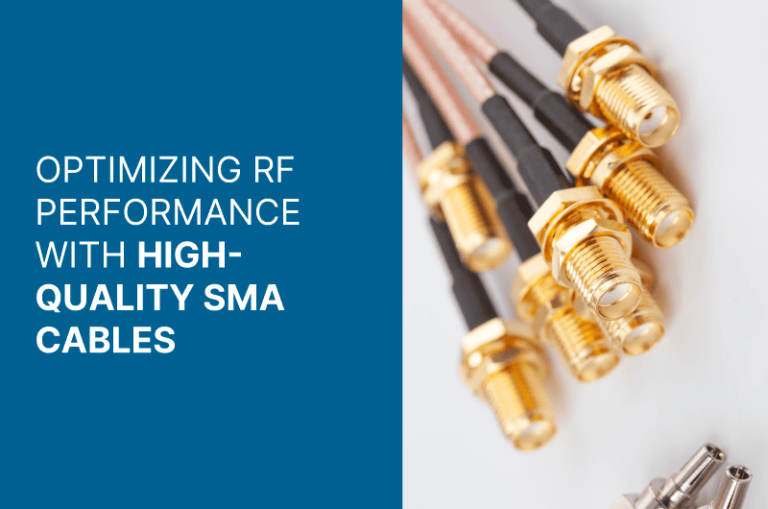
SMA cables for IoT devices are essential for ensuring efficient and reliable communication. Their low-loss RF connections improve signal quality, which is crucial for the performance of IoT applications. These cables provide durability and flexibility in various environments. They enhance device connectivity, making them suitable for sensors, antennas, and industrial applications. Optimal signal integrity allows for better data transmission and energy efficiency in IoT systems.
Understanding SMA Cables for IoT Devices
Exploring the functionalities and importance of SMA cables provides insights into how these components enhance IoT device connectivity.
Definition and Evolution of SMA Cables
SMA cables, or SubMiniature version A cables, serve as crucial elements in RF applications. They were originally developed in the 1960s to provide reliable connections within telecommunications. Over the decades, their design has evolved while maintaining their core function of reducing signal loss and ensuring durability. As technology has advanced, so too have SMA cables, adapting to the increasing demands of IoT devices.
Key Features that Enhance IoT Devices
Several key features of SMA cables significantly contribute to their effectiveness in IoT applications.
Compact Design for Space Efficiency
The compact design of SMA cables makes them particularly advantageous for modern IoT devices. This small footprint allows for efficient space utilization in devices where every millimeter counts. Their size is ideal for fitting into compact sensors and modules, facilitating seamless integration into various applications.
Superior Mechanical Stability
SMA connectors are renowned for their mechanical stability. This characteristic ensures that they withstand physical stress while maintaining performance. Such robustness is critical for IoT devices that may encounter varying environmental conditions, from industrial settings to outdoor deployments.
Frequency Range and Versatility
These cables support a wide frequency range, typically from DC to 18 GHz or beyond. This versatility allows them to be used in various applications, including data transmission across different wireless technologies. Their adaptability makes them suitable for diverse IoT solutions, from simple sensors to complex communication modules.
The Role of Low-Loss RF Connections in IoT
Low-loss RF connections play a critical role in ensuring the reliability and effectiveness of Internet of Things (IoT) applications. They help maintain signal quality, which is essential for operational efficiency in various devices and systems.
Importance of Signal Quality in IoT Applications
The quality of the signal directly influences the performance of IoT applications. Fluctuations or losses in signal strength can lead to delays and interruptions in communication, adversely affecting device operation. Reliable signal transmission is paramount in scenarios such as data collection, monitoring, and real-time communication.
- Consistent connectivity ensures smoother operations in smart homes and industries.
- High-quality signals facilitate accurate data capture and monitoring.
- Improved signal integrity enhances user experience across connected devices.
Energy Efficiency and Signal Integrity
Energy efficiency is a key concern in the design of IoT devices. Low-loss connections are engineered to reduce power consumption while ensuring optimal signal integrity. This efficiency is crucial for battery-operated devices.
Extending Battery Life in IoT Devices
Utilizing low-loss RF connections can significantly extend the battery life of IoT devices. By minimizing the energy required to maintain a strong signal, devices can operate for longer periods without needing frequent recharging. This is especially beneficial for remote sensors and portable devices.
Reliable Data Transmission and Expanded Range
Maintaining a strong, clear signal not only enhances data transmission reliability but also expands the effective range of IoT devices. Low-loss RF connections enable devices to communicate over greater distances without signal degradation, facilitating wider network coverage in urban and rural environments.
- Expanded range is essential for applications like asset tracking in logistics.
- Reliable data transmission supports real-time analytics in industrial settings.
- Longer distances improve signal access in challenging environments, such as dense urban areas.
Applications of SMA Cables in IoT Devices
SMA cables play a pivotal role in enhancing connectivity in various applications within the Internet of Things (IoT) ecosystem. Their effectiveness is observed in multiple sectors where reliable communication is a necessity.
Connecting Sensors and Monitoring Devices
In the realm of IoT, sensors require dependable connections to relay information accurately. SMA cables are commonly used to link sensors to monitoring systems, ensuring that data is transmitted with minimal loss. This is crucial for applications in environmental monitoring, health care, and smart cities, where timely and precise data collection is essential.
Enhancing Antenna Performance in IoT
Another significant application of SMA cables is in optimizing antenna performance. The effectiveness of antennas often determines the communication range and reliability of IoT devices. SMA connectors provide a solid interface between the antenna and connected devices, contributing to improved signal strength and clarity.
Types of Antennas with SMA Cables
- Patch Antennas: Compact and ideal for limited spaces, used widely in IoT applications.
- Dipole Antennas: These provide omnidirectional coverage, suitable for environments where signals need to be received from various angles.
- Directional Antennas: Useful for long-range communication, allowing signals to be focused in a particular direction for enhanced performance.
SMA Connectors and Module Integration
SMA connectors facilitate seamless integration between antennas and various modules within IoT devices. This connectivity is vital for ensuring that the data transmitted wirelessly is not compromised. Modules designed for communication protocols, such as LTE or Wi-Fi, benefit significantly from the stability provided by SMA cables.
Use in Tracking and Industrial Automation
The utilization of SMA cables extends into tracking systems and industrial automation as well. These applications require robust connectivity to ensure accurate data transmission over extended periods and distances.
Tracking Devices Connectivity
In logistics and asset management, tracking devices connected via SMA cables offer reliable performance. The low-loss characteristics enable these devices to operate efficiently even in challenging environments, ensuring continuous data transmission related to locations or status updates.
Industrial Automation Solutions
In industrial settings, where machinery and equipment communicate with central systems, SMA cables provide the reliability needed for uninterrupted operations. These connections are essential for monitoring performance, managing production lines, and coordinating various automated processes. The durability and stability of SMA cables in these environments help maintain operational efficiency.
Choosing the Right SMA Cable for IoT
Selecting an appropriate SMA cable is crucial for optimizing performance in IoT applications. Various factors influence the decision-making process, leading to enhanced connectivity and reliability of devices.
Factors in Selecting SMA Cables
Several essential aspects must be considered when choosing the right SMA cable. Each factor plays a significant role in ensuring the cable meets the specific requirements of IoT applications.
Cable Length and Signal Loss
The length of the cable significantly impacts signal quality. Generally, shorter cables exhibit less signal loss, resulting in clearer communication. As the cable length increases, attenuation can occur, which may distort data transmission. Thus, determining the optimal length for a specific application is vital.
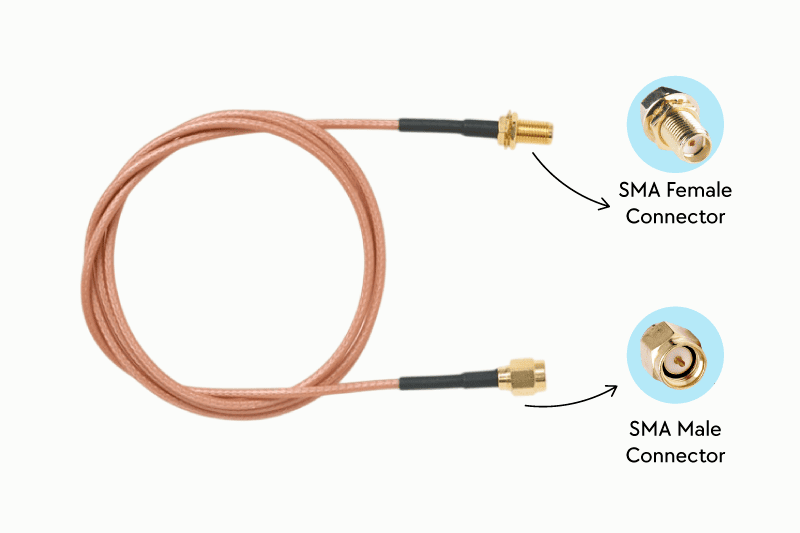
Connector Types: SMA Male and Female
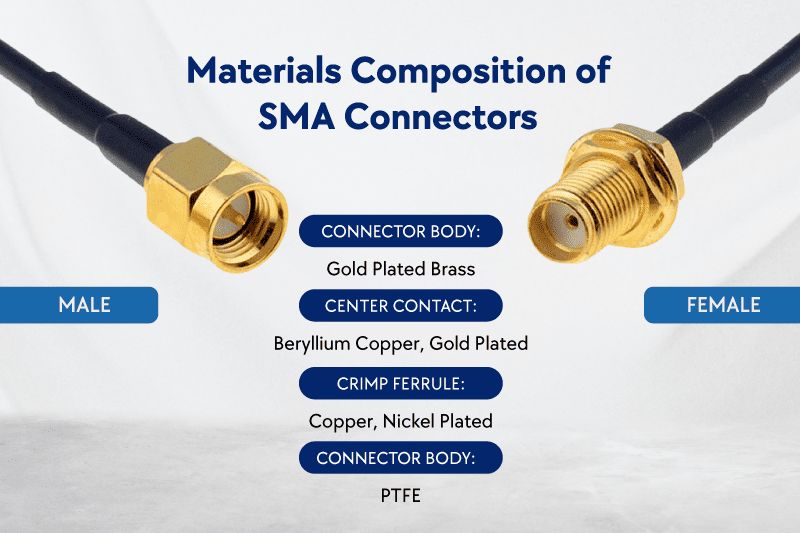
SMA connectors come in male and female configurations, each serving distinct purposes. Choosing the correct type depends on the devices being connected. It’s essential to ensure compatibility between the cable and the devices, as mismatched connectors can lead to installation challenges and performance issues.
Environmental Considerations for SMA Cables
The operating environment for IoT devices also affects cable selection. Factors like temperature, humidity, and potential exposure to chemicals can influence the effectiveness and durability of SMA cables.
Material Quality and Durability
High-quality materials are imperative for manufacturing SMA cables. Cables made from superior materials, such as copper, offer better conductivity and longevity. Ensuring that the cable can withstand environmental stresses prolongs its life and maintains performance integrity.
Operating Conditions and Adaptability
Understanding the specific operating conditions is crucial for cable selection. For instance, applications exposed to extreme temperatures or moisture will require specialized cables with enhanced protective features. The adaptability of the SMA cable to these conditions determines the long-term reliability of the IoT devices.
Evaluating SMA cable products is essential to ensure optimal connectivity in IoT applications. This comparative analysis highlights the key offerings available in the market and assesses their performance.
Comparative Analysis of SMA Cable Products
Overview of Top SMA Cable Products
Several SMA cable products stand out due to their specifications and performance characteristics. These options cater to various needs, providing reliable connectivity for IoT devices.
Low Loss RF Antenna Cable Options
- Low Loss RF Antenna Cable SMA-M / R-TNC (5m / 16.4 feet): Designed for applications requiring minimal signal loss, this cable provides excellent performance, making it ideal for RFID systems.
- Low Loss RF Antenna Cable SMA-M / SMA-M (10m / 32.8 feet): This option offers extended reach while maintaining low attenuation, ensuring efficient data transmission over longer distances.
- Low Loss RF Antenna Cable SMA-M / SMA-M (5m / 16.4 feet): A reliable choice for applications needing strong signals with low loss, suitable for various IoT devices.
- Low Loss RF Antenna Cable N-M / R-TNC (5m / 16.40 feet): This product is useful in scenarios requiring connections between N-type and R-TNC connectors, providing versatility in configurations.
SMA and TNC Connector Configurations
When it comes to connector types, SMA and TNC configurations are highly popular in IoT applications. Each offers unique benefits:
- SMA Connectors: Known for their compact size and sturdy design, these connectors are ideal for high-frequency applications.
- TNC Connectors: Featuring a threaded coupling mechanism, TNC connectors provide enhanced durability and stability in environments with vibrations.
Evaluating Product Performance and Returns
The performance of SMA cable products is crucial for their effectiveness in IoT applications. Several factors contribute to overall performance and value.
Long-Term Reliability and Warranty
When selecting SMA cables, long-term reliability is a significant consideration. Quality cables typically come with warranties, reflecting the manufacturer’s confidence in their durability. A strong warranty indicates that the product can withstand usage without significant degradation over time.
User Reviews and Feedback
User feedback plays an essential role in evaluating SMA cable products. Reviews from customers provide insights into real-world performance and reliability. High ratings on platforms highlight satisfactory experiences, while lower reviews can indicate potential issues to consider before purchasing.
Future Trends in SMA Cables and IoT Connectivity
The future of SMA cables in IoT connectivity is marked by significant advancements and a growing range of applications. As technology evolves, the capabilities of low-loss RF connections are becoming increasingly critical in optimizing performance.
Innovations in Low-Loss RF Connections
Continuous innovation aims to minimize signal loss and enhance performance. Manufacturers are exploring new materials and designs to achieve lower attenuation and better signal integrity. Techniques like enhanced shielding and improved conductor materials are being implemented to mitigate interference. Some of the key innovations include:
- Advanced dielectric materials that reduce signal degradation.
- Improved connector designs to enhance mechanical stability and reduce connection-related losses.
- Integration of smart technologies to monitor signal quality in real time.
Expansion of IoT Applications Utilizing SMA Cables
The landscape of IoT applications is continually expanding, leading to a heightened demand for SMA cables in various sectors. These cables are increasingly found in numerous applications that require reliable connectivity. Their importance is particularly evident in:
- Smart cities: Utilization of SMA cables in sensor networks to gather data for urban management.
- Healthcare: Implementation in medical devices for remote patient monitoring and data transmission.
- Industrial IoT: Deployment in automation systems where real-time communication is essential.
Emerging Communication Protocols
As communication standards evolve, there is a notable shift towards protocols that support higher data rates and lower latency. Emerging protocols such as 5G and LPWAN (Low Power Wide Area Network) require robust connections offered by SMA cables. The adoption of these protocols will fundamentally alter how devices communicate, maximizing the capabilities of the IoT.
Integration with New IoT Technologies
Recent developments in IoT technologies are paving the way for greater integration with SMA cables. Innovations in edge computing and AI are enhancing data processing speeds and efficiency. This is leading to more advanced applications relying on SMA cables for seamless connectivity with minimal signal loss.
If you would like to receive a quote for any of custom cables or connectors, please do not hesitate to contact us by sending an email to sales@readytogocables.com or calling in the USA this phone number (682-325-1944).