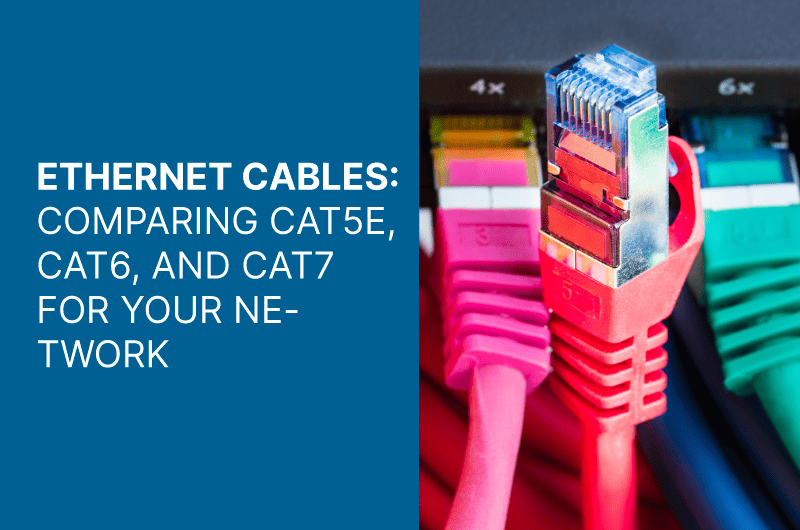
Ethernet cables are essential for connecting network devices and enabling data communication. This article will explore three common categories: Cat5e, Cat6, and Cat7. Each category has unique specifications, performance characteristics, and suitable applications. Understanding these differences is crucial for selecting the right ethernet cables for various networking needs.
Overview of Ethernet Cables
This section provides a foundational understanding of Ethernet cables, which are essential components in modern networking systems. Their specifications and applications cater to various communication needs.
Definition and Purpose of Ethernet Cables
Ethernet cables are standardized networking cables primarily used to connect a variety of devices, such as computers, routers, and switches. They facilitate data transmission within networks, enabling seamless communication and interaction. With different categories and specifications, these cables optimize performance, influencing factors like speed, distance, and overall efficiency.
Importance of Choosing the Right Ethernet Cable
Selecting the appropriate Ethernet cable is crucial for maintaining efficient network performance and ensuring that users meet their specific requirements. The right choice allows systems to function optimally, supporting the necessary speeds for tasks such as video streaming, gaming, and large file transfers. Here are key considerations in this process:
- Speed Requirements: Different Ethernet cables offer varying maximum speeds; knowing the needs of your network helps eliminate underperformance.
- Distance Limitations: Each cable category has specific distance constraints. Selecting one that suits the layout of the network ensures reliable connectivity.
- Future-Proofing: Investing in higher-specification cables can mitigate the need for upgrades in the near future, especially as technology advances rapidly.
- Environmental Factors: Considering the installation environment is vital. Factors like electromagnetic interference (EMI) can affect performance, making certain cable types more suitable than others.
Ultimately, meticulous attention to the type and specifications of Ethernet cables ensures smooth network operations and enhances the user experience across various applications.
Exploring Cat5e Ethernet Cables
Cat5e cables are widely utilized in both residential and commercial networking setups. Understanding their specifications, performance characteristics, and applications is essential for making informed decisions regarding network infrastructure.
Specifications and Characteristics of Cat5e
Category 5e (Cat5e) cables are an upgraded version of the original Cat5 standard, designed to handle more data while reducing interference. Key specifications include:
- Maximum Speed: Supports data transfer rates of up to 1 Gbps, allowing for effective communication in most standard networking scenarios.
- Maximum Frequency: Operates at frequencies of up to 100 MHz, accommodating a wide range of applications.
- Distance Limit: Effective for distances up to 100 meters (328 feet), which is adequate for most home and office setups.
The design of Cat5e cables includes tighter twists in the wire pairs, which helps in minimizing crosstalk and interference, leading to an overall improvement in signal quality compared to earlier cable types.
Performance and Applications of Cat5e
Performance metrics for Cat5e cables make them suitable for various online activities. With a capability of transmitting data at 1 Gbps, they are ideal for:
- Video conferencing and VoIP calls, providing clear audio and video without significant lag.
- Streaming high-definition (HD) content, enabling seamless viewing experiences.
- Basic internet browsing and online gaming, where stable connections are essential.
Although Cat5e serves well for most home and small office scenarios, it may struggle in high-demand environments, such as data centers, where faster and more reliable connections are required.
Choosing Cat5e for Your Network
When selecting Cat5e cables for a network, several factors should be considered to maximize their effectiveness:
- Cost-Effectiveness: Generally, Cat5e cables are more affordable than higher-category cables like Cat6 and Cat7, making them an appealing choice for budget-conscious setups.
- Suitable Applications: Evaluate the specific needs of the network. For basic tasks and moderate internet usage, Cat5e is often sufficient.
- Future Upgrades: Consider long-term networking plans. If future demands may include higher speeds or more bandwidth-heavy applications, investing in a higher category cable may be prudent.
Cat5e cables can serve as a solid foundation for a networking system, especially in situations where high costs are a deterrent. However, awareness of future requirements is key to ensuring ongoing performance.
Delving into Cat6 Ethernet Cables
Cat6 Ethernet cables represent a significant advancement in Ethernet technology, offering enhanced performance for modern networking needs.
Specifications and Characteristics of Cat6
The specifications of Cat6 cables distinguish them from their predecessors, such as Cat5e. Key characteristics include:
- Maximum Speed: Cat6 supports data rates of up to 10 Gbps for short distances, specifically up to 55 meters, and maximum speeds of 1 Gbps over longer runs of 100 meters.
- Maximum Frequency: These cables operate at a frequency of up to 250 MHz, which is notably higher than that of Cat5e.
- Conductor Specifications: Cat6 cables usually utilize thicker gauge wires than Cat5e, which helps to reduce crosstalk and improve the signal quality.
Performance Enhancements Over Cat5e
The advances in Cat6 technology yield several performance benefits when compared to Cat5e. Notable enhancements include:
- Reduced Crosstalk: Tighter twisting of pairs in Cat6 cables minimizes the interference that can degrade performance.
- Improved Bandwidth: The increased frequency capability allows for greater data transmission and better handling of bandwidth-intensive applications.
- Consistency in Performance: Cat6 cables maintain reliable connectivity even under heavy network loads, making them suitable for high-demand environments.
Applications Suitable for Cat6 Cabling
Cat6 cables are versatile and are employed in various network applications, particularly where higher bandwidth is a requirement. Common uses include:
- Office Networking: Ideal for businesses implementing Gigabit and 10-Gigabit Ethernet.
- High-Speed Internet: Suitable for home setups that require robust and fast internet connections for streaming, gaming, and videoconferencing.
- Data Centers: Utilized in data center environments where performance and speed are crucial to operations.
Considerations for Using Cat6
When choosing to implement Cat6 Ethernet cables, several factors should be considered:
- Environmental Factors: Ensure that the cabling is appropriate for the environment—indoor vs. outdoor installations can require different types of cable.
- Distance Requirements: Understand the network’s layout, particularly if runs exceed 55 meters for maximum performance at 10 Gbps.
- Future-Proofing: Opting for Cat6 can be a strategic decision, as it prepares the network for future advancements in technology.
Understanding Cat7 Ethernet Cables
Cat7 Ethernet cables represent a significant advancement in network cabling technology. Their superior design offers enhanced performance and reliability for various demanding applications.
Specifications and Characteristics of Cat7
This category of Ethernet cable is distinguished by its advanced specifications aimed at higher performance in data transmission. The key features include:
- Maximum Speed: Capable of supporting data transfer rates up to 10 Gbps for distances of up to 100 meters.
- Maximum Frequency: With a frequency of up to 600 MHz, Cat7 cables can handle a substantial amount of data, making them ideal for high-bandwidth applications.
- Shielding: Cat7 cables utilize improved shielding techniques that significantly reduce electromagnetic interference (EMI), enhancing signal quality and stability.
Performance and Applications of Cat7
Due to its engineering and construction, Cat7 cables excel in high-performance networking environments. They are particularly well-suited for:
- Data Centers: The high-speed capabilities make Cat7 preferable for data centers that require rapid data transfer and connectivity between servers.
- Television and Multimedia: Streaming services that demand high-definition content benefit from Cat7’s ability to maintain quality over longer distances.
- Industrial Settings: In environments where external interference is a concern, Cat7’s shielding ensures robust performance.
Compatibility and Installation of Cat7
While Cat7 cables offer many advantages, certain considerations must be kept in mind regarding compatibility and installation:
- Connectors: Cat7 cables typically use GG45 or TERA connectors instead of the traditional RJ45. This can lead to compatibility issues with older devices that only support RJ45.
- Installation Requirements: Proper installation is crucial, requiring technicians who are aware of the specific needs of Cat7 cables to ensure optimal performance.
- Future Compatibility: Although Cat7 functionality may not always integrate seamlessly with older Ethernet standards, it can provide a means of future-proofing a network by accommodating higher data rates.
Key Differences Across Cat5e, Cat6, and Cat7
The variations between Cat5e, Cat6, and Cat7 Ethernet cables significantly impact their performance and suitability for specific applications. Understanding these differences is essential for optimizing network efficiency.
Comparing Speeds and Frequencies
One of the most significant distinctions among these cable categories is their maximum data transmission speeds and frequency capabilities:
- Cat5e:
This cable supports speeds of up to 1 Gbps, making it suitable for basic networking needs. It operates at a frequency of 100 MHz. - Cat6:
Capable of handling 1 Gbps at distances up to 100 meters and 10 Gbps at shorter distances (up to 55 meters), Cat6 operates at a frequency of 250 MHz. - Cat7:
Offering a maximum speed of 10 Gbps across 100 meters, Cat7 features an impressive frequency capability of up to 600 MHz, which reduces crosstalk and improves overall performance.
Analyzing Distance Capabilities
Distance is crucial when considering Ethernet cables, particularly for applications requiring higher bandwidth:
- Cat5e:
Remains effective for distances up to 100 meters when operating at 1 Gbps. Its performance does not degrade significantly over this range. - Cat6:
While it can transmit data at 10 Gbps, this performance is typically reliable only at lengths up to 55 meters. Beyond this distance, it reverts to supporting 1 Gbps. - Cat7:
Maintains its maximum speed of 10 Gbps even over 100 meters, making it an ideal choice for extensive installations where high-speed data is essential.
Cost Analysis for Budget Considerations
Cost plays a crucial role in deciding which Ethernet cable to choose. Each category has a different price point, which can influence budget allocation for networking projects:
- Cat5e:
Generally the most affordable option, Cat5e is cost-effective for basic needs and small-scale installations. - Cat6:
While slightly more expensive than Cat5e, Cat6 offers better performance capabilities, making it a favorite for modern office environments. - Cat7:
Typically the priciest option due to advanced technology and shielding, Cat7 is favored for high-demand settings, like data centers, where superior performance is necessary.
Factors to Consider When Choosing Ethernet Cables
Selecting the right Ethernet cable is crucial for achieving optimal network performance. Several factors impact the effectiveness of cable choices, ranging from the specific requirements of the network to environmental conditions and budget considerations.
Assessing Your Network Requirements
Understanding the specific needs of a network is the first step in selecting the appropriate Ethernet cable. Different applications require varying data rates and performance capabilities. Key considerations include:
- Types of devices connected, such as computers, printers, and switches.
- Required bandwidth for applications like video conferencing, gaming, and file transfers.
- Number of users and simultaneous connections that may be active on the network.
- Future scalability requirements for technology upgrades or increased bandwidth demands.
Evaluating Environmental Factors
The installation environment plays a significant role in the choice of Ethernet cables. Factors to analyze include:
- Location: Indoor environments can have different considerations compared to outdoor settings. Outdoor cables often require additional protection against moisture and UV exposure.
- Electromagnetic Interference (EMI): Areas with high electromagnetic interference may necessitate cables with superior shielding to maintain signal integrity.
- Temperature and Humidity: Extreme temperatures or high humidity can affect cable performance, making it important to select cables rated for such conditions.
Future-proofing Your Network with the Right Choice
Technology evolves rapidly, and selecting cables that can accommodate future advancements is essential. To future-proof a network, consider the following:
- Invest in higher category options like Cat6 or Cat7, as they typically offer better performance and adaptability for future applications.
- Be aware of emerging technologies that may require higher data rates and adjust cable choices accordingly.
- Regularly assess the network’s performance to identify potential upgrades before they become necessary.
Determining Cost-effectiveness for Business Networks
Cost plays an important role in the decision-making process, especially for businesses looking to implement or upgrade their networking infrastructure. Factors to consider include:
- Initial Investment: Higher category cables may incur a greater upfront cost but can lead to savings in the long run due to reduced maintenance and fewer upgrades.
- Installation Costs: The complexity of installation can vary by cable type. Consider labor costs alongside material expenses.
- Performance Longevity: Investing in quality cables can minimize the need for replacements and ensure consistent network performance over time.
Frequently Asked Questions About Ethernet Cables
This section addresses common queries regarding Ethernet cables, focusing on practical differences, applications, and performance considerations. Understanding these topics can lead to better decisions when selecting cables for various networking needs.
Differences Between Cat6 and Cat6a
While both Cat6 and Cat6a cables serve similar purposes in networking, significant differences exist between them. Cat6 cables support speeds up to 10 Gbps at shorter distances of 55 meters, while Cat6a extends that capability to the full 100 meters. This enhanced performance in Cat6a comes from better shielding, which effectively reduces crosstalk and improves signal integrity. Consequently, users in high-bandwidth environments may prefer Cat6a to ensure robust and reliable data transmission over longer distances.
Choosing Between Cat5e, Cat6, and Cat7 for Home Use
Selecting the right Ethernet cable for home use depends on specific needs and usage patterns. For basic internet browsing, streaming, and video calls, Cat5e generally suffices, offering a maximum speed of 1 Gbps. However, for households requiring faster internet for gaming or heavy streaming, Cat6 is a better option, providing speeds up to 10 Gbps over limited distances. Cat7 is designed for users who demand the highest performance and are willing to invest in more advanced technology. This cable type is especially beneficial for smart home setups or numerous connected devices that can utilize extensive bandwidth efficiently.
Impact of Cable Length on Network Performance
The length of Ethernet cables can significantly influence network performance. Each category of cable has a specified maximum effective distance, beyond which speed and reliability may diminish. For instance, Cat5e remains effective at distances up to 100 meters but tends to revert to lower speeds over longer runs. In contrast, Cat6 supports 10 Gbps only up to 55 meters; beyond that, it returns to 1 Gbps for longer lengths. Cat7, on the other hand, can maintain its performance levels at 100 meters, making it suitable for larger installations. Thus, considering the length during installation is crucial for achieving optimal performance.
If you would like to receive a quote for any of custom cables or connectors, please do not hesitate to contact us by sending an email to sales@readytogocables.com or calling in the USA this phone number (682-325-1944).