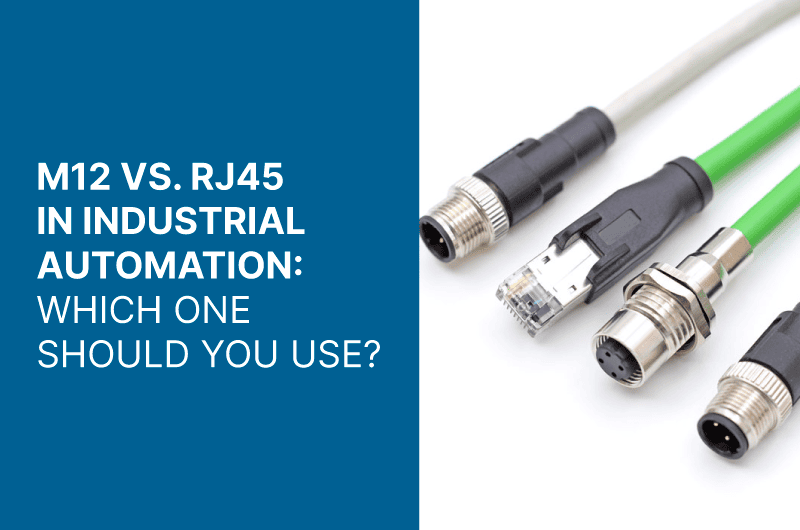
M12 to RJ45 connectors play important roles in industrial automation. This article explores their characteristics, benefits, and applications to help determine which connector is best for specific needs. M12 connectors excel in harsh environments, providing reliability and protection. RJ45 connectors offer compatibility with existing networks and high-speed data transmission. The integration of M12 to RJ45 solutions enhances flexibility in various systems, including custom M12 cables for specialized applications.
Understanding M12 to RJ45 Connectors
In industrial automation, M12 to RJ45 connectors serve distinct roles and are designed for different operational environments. Their unique features make them suitable for various applications that involve communication and connectivity between devices.
Overview of M12 Connectors
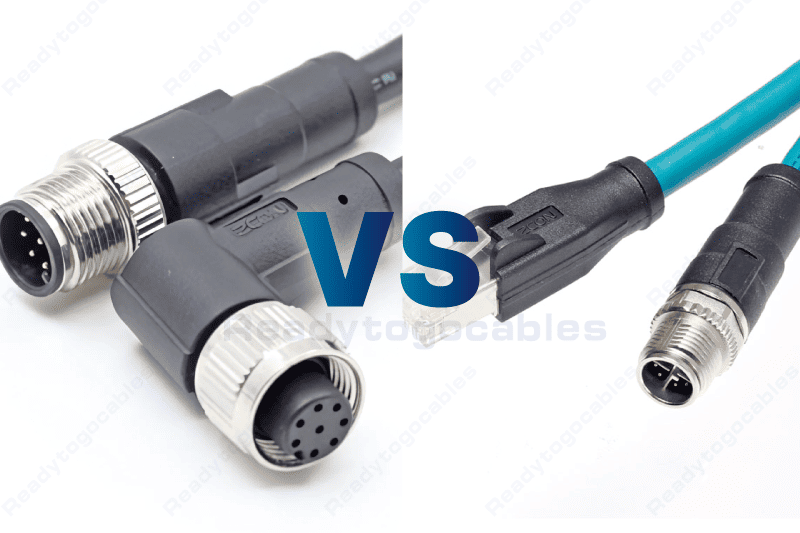
The M12 connector is known for its circular design and is commonly used in industrial settings due to its durability and resistance to harsh conditions. This type of connector typically measures 12 mm in diameter and adheres to the IEC 61076-2-101 standard, ensuring reliability in various applications.
- Robustness: M12 connectors are engineered to withstand the rigors of industrial environments. They are often rated with an IP67 protection level, making them resistant to dust, water, and moisture.
- Variety of Configurations: Available in multiple pin configurations—such as 4, 5, or 8 pins—M12 connectors support several communications protocols, enhancing their versatility.
- Resistance to Interference: Their design reduces the impact of electromagnetic interference (EMI), making them suitable for control applications where signal integrity is crucial.
Overview of RJ45 Connectors
RJ45 connectors are rectangular and primarily associated with Ethernet networking. Widely recognized in both industrial and commercial contexts, these connectors serve as the standard for local area network (LAN) connections.
- Familiarity and Compatibility: RJ45 connectors are ubiquitous, facilitating seamless integration with existing network infrastructures. Their widespread use ensures compatibility with a sizeable range of devices and systems.
- Cost-Effectiveness: Given the mass production of RJ45 connectors, they are less expensive compared to specialized industrial connectors like the M12, making them a cost-effective choice for many applications.
- High-Speed Communication: Capable of supporting high data transfer rates, RJ45 connectors are ideal for applications that demand fast and efficient communication.
Comparing M12 to RJ45 for Industrial Applications
The selection between M12 to RJ45 connectors depends largely on the specific requirements of the application, including environmental conditions and data communication needs. M12 connectors excel in settings where durability and protection from environmental hazards are paramount, such as in the chemical and pharmaceutical industries.
In contrast, RJ45 connectors are more suitable in controlled environments where high-speed data transmission is necessary. They are commonly utilized in office-like settings within industrial plants, where conditions are less demanding.
Ultimately, the decision on which connector to deploy hinges on a careful evaluation of the operational context, as well as the overall system design requirements. A solid understanding of M12 to RJ45 connectors can facilitate better decision-making in industrial automation projects.
Key Features and Benefits
The choice of connectors in industrial automation significantly influences system performance and reliability. Both M12 and RJ45 connectors possess unique features and advantages suited to different environments and applications. Understanding these characteristics is essential for optimizing industrial communication systems.
M12 Connectors: Features and Advantages
M12 connectors are designed for demanding industrial environments. Their circular shape and robust construction make them ideal for various applications. Key features include:
- High Protection Rating: M12 connectors typically come with an IP67 rating, ensuring resistance to dust and water ingress. This makes them suitable for harsh conditions.
- Electromagnetic Interference (EMI) Resistance: Their design minimizes susceptibility to EMI, ensuring reliable data transmission in environments with high electronic noise.
- Versatile Protocol Support: M12 connectors support multiple communication protocols, including PROFINET and EtherNet/IP, making them adaptable for diverse applications.
- Secure Connections: The locking mechanism prevents accidental disconnections, which is critical in industrial settings.
RJ45 Connectors: Features and Advantages
RJ45 connectors are widely used in Ethernet networking. They offer several advantages beneficial for industrial applications:
- Cost-Effectiveness: RJ45 connectors are generally more affordable due to their widespread use and mass production.
- High Data Transfer Rates: Capable of supporting speeds up to 1 Gbps, these connectors are suited for bandwidth-intensive applications.
- Widespread Compatibility: RJ45 connectors are the standard in most Ethernet networks, ensuring seamless integration with existing infrastructure.
- Simple Installation: Their user-friendly design allows for easy implementation and maintenance, which is critical in dynamic industrial environments.
Differences in Data Transmission and Performance
The comparison of M12 and RJ45 connectors reveals significant differences in terms of data transmission capabilities and overall performance:
- Data Rate: While RJ45 connectors excel in high-speed data transfers, M12 connectors prioritize reliability and stability in challenging conditions.
- Environmental Resistance: M12 connectors are engineered for resilience in extreme conditions, whereas RJ45 connectors may require additional protection in hostile environments.
- Signal Integrity: The robust construction of M12 connectors contributes to better signal integrity amidst vibrations and interference, outperforming RJ45 in rugged settings.
Industrial Automation Applications
In industrial automation, the choice of connectors plays a vital role in ensuring effective communication and reliability across systems. M12 and RJ45 connectors each serve unique applications based on their characteristics, making them suitable for diverse environments.
Use of M12 Connectors in Harsh Environments
M12 connectors are specifically designed to excel in challenging industrial settings. Their robust construction enhances durability against mechanical stress and environmental factors.
Protection Against Vibration and Electromagnetic Interference
Manufacturing processes often involve significant vibration and electromagnetic interference (EMI). M12 connectors provide superior protection, ensuring stable data transmission. They meet IP67 specifications, which safeguard against dust and moisture intrusion. This reliability is critical in sectors such as pharmaceuticals and food manufacturing, where operational integrity must be maintained.
Custom M12 Cables for Specific Applications
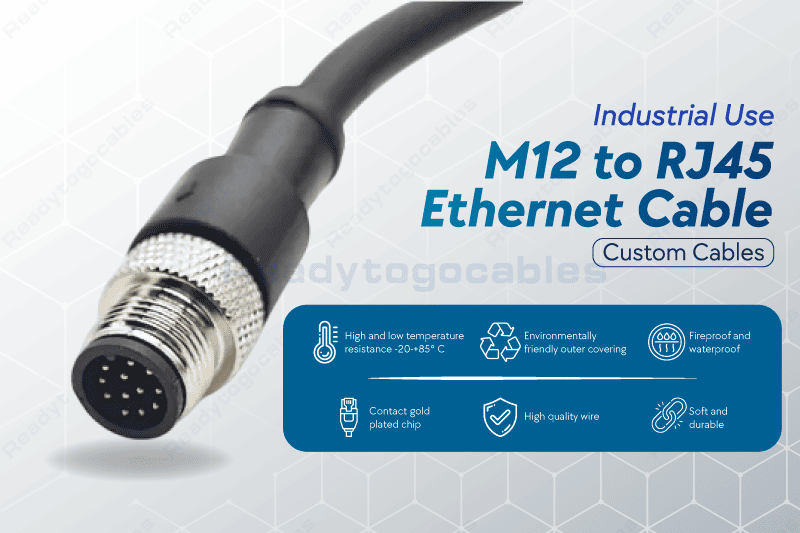
Custom M12 cables offer tailored solutions for unique automation challenges. These cables can be designed for specific length requirements, connector types, and shielding options to further enhance performance in demanding environments. This flexibility allows for seamless integration into existing systems while ensuring optimal functionality and communication integrity.
Use of RJ45 Connectors in Industrial Ethernet
The widespread use of RJ45 connectors in industrial automation reflects their versatility in Ethernet applications. Their compatibility with standard data networks makes them a preferred choice for many installations.
High-Speed Data Transmission
RJ45 connectors facilitate high-speed data transmission, which is essential for modern industrial applications. They support speeds up to 1 Gbps, enabling efficient communication across various devices. This capability is particularly advantageous in automation systems requiring rapid data exchange, such as real-time monitoring and control applications.
Compatibility with Existing Ethernet Networks
One of the significant advantages of RJ45 connectors is their compatibility with existing Ethernet networks. This compatibility reduces the need for costly infrastructure upgrades, allowing businesses to leverage their current network setup. Integrating new devices with RJ45 connectors allows seamless communication within an established framework, optimizing operational efficiency.
Integration Strategies
Integrating M12 and RJ45 connectors in industrial settings involves understanding compatibility, functionality, and application requirements. Effective strategies ensure seamless communication across various automation systems.
M12 to RJ45 Adapters: Bridging the Gap
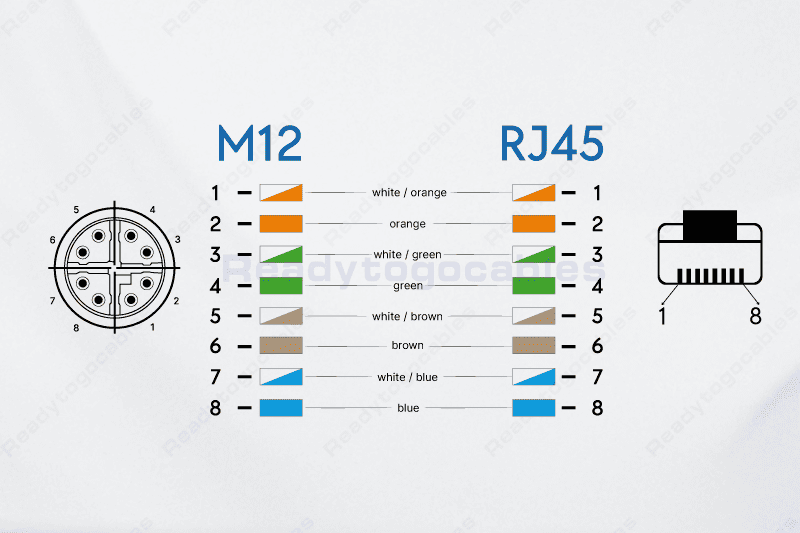
Adapters play a critical role in connecting M12 connectors to RJ45 networks, allowing for flexible integration of devices across systems. With the increasing demand for interoperability, these adapters facilitate transitions between different communication protocols.
When selecting M12 to RJ45 adapters, factors such as data rate compatibility, environmental protection, and cable length must be taken into account. Quality adapters not only ensure reliable connections but also enhance the overall network performance.
Choosing the Right Connector for Your System
Assessing which connector best fits a specific application requires careful consideration of various factors.
Factors to Consider in Connector Selection
- Environmental Conditions: Determine whether the installation site is prone to dust, moisture, or electromagnetic interference. M12 connectors excel in harsh environments, while RJ45 connectors are suited for controlled settings.
- Protocol Compatibility: Evaluate the communication protocols in use. M12 connectors often support multiple protocols, making them versatile choices for complex systems.
- Future Scalability: Consider potential future upgrades or expansions. Opting for connectors that can adapt to new technologies may save costs and labor in the long run.
Balancing Cost and Performance
Balancing cost and performance is essential when selecting connectors. M12 connectors generally come at a higher price point due to their robust construction and additional features.
In contrast, RJ45 connectors offer a more economical solution for environments where high-speed connections are necessary, but harsh conditions are not a concern. Organizations should weigh the importance of durability against budget constraints when making their choice.
It is often beneficial to implement a mixed strategy using both connector types, supported by proper planning and strategic investments in M12 to RJ45 adapters. This approach maximizes efficiency while meeting diverse operational requirements.
Leading Brands and Compatibility
Leading brands in the industrial automation sector play a crucial role in ensuring compatibility and reliability between M12 and RJ45 connectors. Their adherence to global standards provides users with a variety of options tailored for specific applications.
Overview of Brands Supporting M12 and RJ45
Many companies produce connectors for industrial automation, emphasizing durability and compatibility. These brands prioritize meeting industry standards to ensure their products integrate seamlessly into various automation systems. Some key players include:
- Siemens
- Rockwell Automation
- Schneider Electric
- Beckhoff
- Phoenix Contact
- ABB
Popular Brands in Industrial Automation and Their Preferences
Different brands exhibit preferences for M12 and RJ45 connectors based on their specific products and targeted industry sectors. Understanding these preferences helps in selecting appropriate solutions.
Service and Support for Various Industrial Needs
Major brands offer extensive service and support to meet diverse industrial requirements. This includes:
- Technical support for installation and troubleshooting.
- Product training sessions for efficient use and maintenance.
- Custom solutions for unique applications, including custom M12 cables.
Ensuring Compatibility Across Systems and Devices
Compatibility is a key consideration in the design of connectors. Leading manufacturers ensure their products can integrate with a range of devices, promoting efficient communication and reliable performance. Important aspects include:
- Adhering to international standards such as IEC and ISO, which help maintain consistency across different platforms.
- Designing adaptors and cables that bridge M12 and RJ45 systems, thus aiding in the transition to newer technologies.
- Providing robust solutions that withstand extreme conditions, essential for industrial environments.
Addressing Common Questions
This section provides clarity on frequently asked questions regarding M12 and RJ45 connectors in industrial automation. The insights gathered here can assist in resolving common uncertainties and challenges faced by professionals in the industry.
FAQs About M12 and RJ45 in Industrial Automation
When it comes to connectors in industrial settings, many questions arise. Some of the most common queries include the following:
- What are the main differences in usage between M12 and RJ45 connectors?
- In which environments are M12 connectors most effective?
- Can RJ45 connectors be used in industrial applications?
- What are the potential costs associated with implementing M12 versus RJ45?
- How do signal integrity and data loss compare between the two connector types?
These questions highlight the critical choices that need to be made when designing and implementing automated solutions in various environments.
Solutions for Unique Connection Challenges
Integration of M12 and RJ45 connectors can sometimes pose unique challenges. However, there are specific strategies available to address these issues effectively.
Adapting to Different Communication Protocols
Industrial automation often requires compatibility with various communication protocols. M12 connectors can support a range of protocols, making them versatile for different applications. It’s essential to evaluate existing systems and determine the specific protocols in use, ensuring that any selected connectors can accommodate these needs.
When utilizing RJ45 connectors, ensure that the associated devices are universally compatible. The adaptability of M12 to RJ45 adapters allows for flexible integration, accommodating protocols such as PROFINET, EtherNet/IP, and Modbus.
Ensuring Reliable Connections in Critical Applications
In many industrial settings, maintaining reliable connections is paramount. M12 connectors excel in harsh environments, providing high levels of protection against contaminants, vibration, and electromagnetic interference. This makes them an excellent choice for critical applications where failure is not an option.
On the other hand, RJ45 connectors work well in controlled environments where data speeds are essential, but they may require additional protective measures in tougher conditions. For critical industrial setups, the use of protective enclosures or shields can help mitigate some of the vulnerabilities associated with RJ45 connectors.
Ultimately, understanding the unique weaknesses and strengths of both M12 and RJ45 connectors allows for more informed decisions when setting up systems for various industrial automation needs.
If you would like to receive a quote for any of custom cables or connectors, please do not hesitate to contact us by sending an email to sales@readytogocables.com or calling in the USA this phone number (682-325-1944).