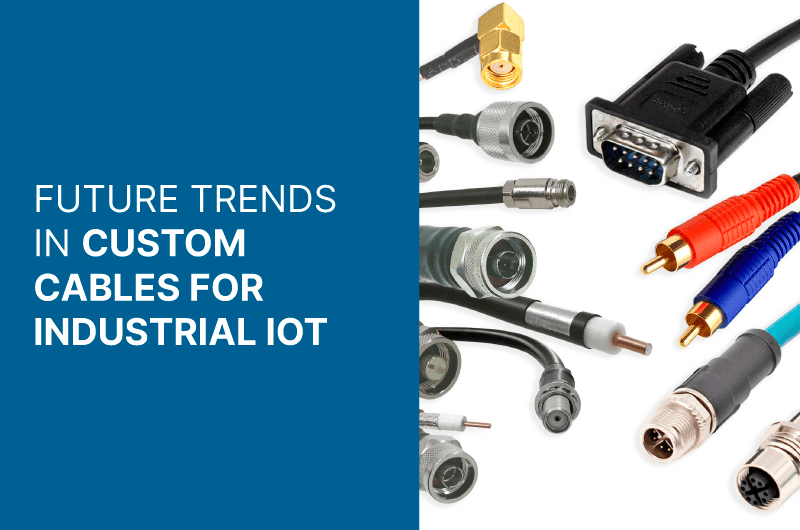
Custom cables for IIoT play a crucial role in the evolving landscape of Industrial IoT. As industries increasingly rely on interconnected devices, the demand for reliable and efficient cable solutions continues to grow. This article explores emerging trends in custom cable design, highlighting advancements such as miniaturization, sensor integration, and the use of advanced materials. Understanding these trends is essential for adapting to future needs in the rapidly changing industrial environment.
Importance of Custom Cables in Industrial IoT
Custom cables are essential components in the evolving landscape of Industrial IoT, playing a pivotal role in ensuring seamless connectivity and efficient data flow.
Reliability and Stability
In industrial environments, obtaining dependable connectivity is crucial. Custom cables provide consistent performance, reducing the risk of disruptions caused by external interferences. These tailored solutions are built to withstand harsh conditions, maintaining a stable connection that is vital for operational continuity.
Data Transmission and Speed
The speed of data transmission is a critical factor in industrial applications. Custom cables are designed to support high-speed connectivity, enabling real-time data exchange between devices. This capability is particularly important for applications that rely on instantaneous feedback, such as automated manufacturing processes.
Power Delivery and Efficiency
Delivering power effectively to devices is another key advantage of custom cables. These cables are engineered to handle high power loads efficiently, ensuring that machinery operates at optimal performance levels. The right custom cable can reduce energy loss, contributing to overall operational efficiency.
Security Advantages
Security is a significant concern in the Industrial IoT realm. Using custom cables enhances data security since wired connections are inherently less vulnerable to hacking compared to wireless counterparts. This reduced risk of unauthorized access is critical in protecting sensitive industrial data from potential threats.
Emerging Trends in Custom Cable Design
Innovations are rapidly reshaping the landscape of custom cable design, reflecting the evolving demands of the Industrial IoT. Key trends include miniaturization, sensor integration, and the use of advanced materials.
Miniaturization
The trend towards smaller, more compact devices drives the need for miniaturized cables. Reducing the size of cables allows for easier integration into constrained spaces while maintaining performance. This is especially crucial in industrial settings, where efficient use of space can enhance overall operational effectiveness.
Integration with Sensors
Cables are not only conduits for data but are increasingly becoming intelligent components themselves. The integration of sensors within custom cables opens up a new realm of capabilities.
Predictive Maintenance Capabilities
Smart cables equipped with built-in sensors can monitor conditions like temperature and stress. This real-time feedback assists in predictive maintenance efforts, allowing for interventions before failures occur.
Real-Time Data Monitoring
These advanced cables enable the continuous collection of operational data. This information can be relayed back to central systems, enhancing decision-making and operational efficiency.
Advanced Materials Usage
The adoption of cutting-edge materials significantly impacts the durability and functionality of custom cables. Innovations in material science are transforming traditional design approaches.
Fiber Optic Developments
Fiber optic cables are gaining traction due to their superior speed and reduced interference. These cables enable unprecedented data transmission rates, essential for high-demand applications within the IIoT framework.
Durable Composite Materials
New composite materials are being explored for their potential to withstand harsh environments. These materials exhibit enhanced resistance to chemicals, temperatures, and mechanical wear, making them ideal for industrial applications.
Enhancing Durability for Harsh Environments
As industries face increasingly challenging conditions, the demand for resilient cables is on the rise. Enhanced designs focus on protecting cables from severe temperatures, corrosive substances, and physical stress.
Manufacturers are investing in research and development to create cables that meet these rigorous standards. This focus on durability ensures that critical infrastructure remains operational, minimizing downtime and maintenance costs.
Custom cable manufacturers face a multitude of challenges in today’s rapidly evolving technological landscape. These obstacles often require innovative solutions and strategic planning.
Challenges Facing Custom Cable Manufacturers
Balancing Cost and Innovation
Manufacturers must continuously strive to balance the costs associated with research and development against the need for innovative custom cables. The pressure to deliver high-quality products at competitive prices often creates tension between maintaining profit margins and investing in cutting-edge technology. This balancing act is crucial, as innovation can lead to improved efficiency and expanded market opportunities.
Demands for Energy Efficiency
With an increasing emphasis on sustainability and reducing carbon footprints, manufacturers are under pressure to develop energy-efficient products. Energy-efficient cables not only help companies reduce operational costs but also meet the growing regulatory demands for greener practices. The challenge lies in designing cables that maintain performance standards while still being environmentally friendly.
Keeping Up with Regulatory Requirements
The landscape of compliance is continuously changing, presenting another significant challenge for custom cable manufacturers. Keeping abreast of various local and global regulatory requirements is essential to ensure that all products conform to safety and quality standards. Failure to comply can result in costly penalties and loss of market access.
- Staying informed about updates in regulations
- Investing in training for compliance management
- Developing documentation and quality assurance processes
As these challenges persist, the manufacturers’ ability to adapt and innovate will be critical for positioning themselves successfully in the market. Addressing these issues effectively can lead to a sustainable competitive advantage and enhanced customer relationships.
As the Industrial IoT landscape continues to evolve, several opportunities for growth and innovation are emerging in the field of custom cables. These opportunities are primarily driven by the increasing demand for advanced connectivity solutions and the need for reliable performance in various industrial applications.
Opportunities for Growth and Innovation
Expanding Market Reach
Manufacturers of custom cables have a vast potential to extend their market reach beyond traditional industries. Sectors such as renewable energy, smart agriculture, and autonomous vehicles are increasingly integrating IoT technologies. Custom cables designed for specific needs in these sectors can open new avenues for business growth.
Strategic Collaborations and Partnerships
Forming alliances with technology providers and IoT platform developers can enhance the capabilities of cable manufacturers. Collaborations can lead to innovative products that meet specific market demands, fostering a competitive edge. Partnerships with research institutions can also promote cutting-edge developments in materials and technologies.
Adoption of New Technologies
Rapid advancements in technology present significant opportunities for custom cable manufacturers. By embracing new innovations, companies can improve product designs and functionalities.
Integration with IoT Devices
- Custom cables can be developed to seamlessly integrate with a variety of IoT devices, enhancing the overall efficiency of industrial operations.
- By incorporating features that support data flow and power delivery, these cables can become essential components in the IoT ecosystem.
Role in Digital Transformation
- The shift toward digital transformation in industries underscores the importance of reliable connectivity solutions. Custom cables play a crucial role in ensuring consistent communication between devices.
- As industries transition to smart factories, the demand for robust and flexible cable solutions will continue to rise.
The Hybrid Model of Connectivity
The hybrid model of connectivity integrates both wired and wireless solutions to create a more flexible and reliable infrastructure. This approach is increasingly popular in industrial applications, as it allows businesses to leverage the strengths of both technologies while mitigating their weaknesses.
Combining Wireless and Wired Solutions
Utilizing a hybrid connectivity model allows for seamless communication across devices. The strategic combination of wired connections, known for their reliability and speed, with wireless technologies, which offer mobility and ease of installation, enhances overall network performance. Key advantages include:
- Increased flexibility in device placement and network expansion.
- Improved resilience against disruptions, ensuring operational continuity.
- Optimized resource allocation based on specific application needs.
Applications Benefiting from Hybrid Connectivity
There are numerous industrial applications that stand to gain significantly from hybrid connectivity. Some of the prime sectors include:
- Manufacturing: Enhanced automation systems that require both high-speed data transfer and mobility.
- Logistics: Real-time tracking systems that benefit from both wired and wireless communication.
- Energy Management: Smart grids that utilize hybrid setups for effective monitoring and control.
Case Studies and Success Stories
Several companies have successfully implemented hybrid connectivity models, resulting in improved efficiency and reduced downtime.
- In one major automotive manufacturing plant, integrating wired sensors with wireless data networks led to a 30% increase in production efficiency.
- A logistics company adopted a hybrid approach that combined RFID tags with wired data networks, facilitating quicker inventory management processes and reducing errors.
- In the energy sector, a utility provider utilized a hybrid model to monitor real-time energy consumption, allowing for rapid adjustments and enhanced grid reliability.
Future Projections for Custom Cables in Industrial IoT
As the Industrial Internet of Things continues to evolve, custom cables will need to adapt to meet future technological demands. Key projections revolve around the integration of advanced technologies and anticipation of the needs within industrial systems.
The Role of Artificial Intelligence and Edge Computing
Artificial intelligence (AI) and edge computing are becoming integral to enhancing operational efficiencies in industrial settings. AI algorithms can process vast amounts of data generated by IIoT devices at the edge of the network.
- AI can optimize the performance of custom cables by identifying patterns in data flow and diagnosing potential failures in real-time.
- With edge computing, data is processed closer to its source, reducing latency and improving response times. This is critical for applications such as automated quality control and machinery monitoring.
Anticipating Needs of Future Industrial Systems
The demands of future industrial systems will necessitate cables that are not only robust but also flexible enough to integrate with emerging technologies. Custom cables must accommodate:
- A greater number of connected devices, requiring scalability in cable design.
- Higher data transfer rates to support advanced analytics and real-time decision-making.
- Enhanced power delivery systems to support energy-efficient operations.
Impact on Smart Factory Development
The evolution of smart factories will have significant implications for the future of custom cables. These factories will rely heavily on seamless connectivity and automation. Key impacts include:
- Increased reliance on smart sensors embedded within cables, allowing for continuous monitoring of environmental and operational parameters.
- The integration of dynamic cable management solutions that adjust to varying operational demands and conditions.
- Developments in sustainability practices, leading to the use of eco-friendly materials in cable manufacturing.
If you would like to receive a quote for any of custom cables or connectors, please do not hesitate to contact us by sending an email to sales@readytogocables.com or calling in the USA this phone number (682-325-1944).