M12 connectors Profinet are essential for reliable communication in industrial Ethernet systems. They offer robust performance and compliance with industry standards, making them ideal for various industrial applications. This article explores the integration of M12 connectors Profinet, focusing on their technical specifications, environmental resistance, and practical applications. Understanding these components is crucial for enhancing connectivity and efficiency in automated environments.
Overview of M12 Connectors for Profinet Integration
M12 connectors have emerged as a critical component in modern industrial communication systems, particularly in the integration of Profinet protocols. These connectors provide a secure and efficient means of data transfer within various industrial applications. Their robust design caters to the demanding environments typically found in manufacturing and automation sectors.
One of the notable features of M12 connectors is their compatibility with the Profinet standard, which enhances the performance of industrial Ethernet. This integration enables seamless communication between devices such as controllers, sensors, and actuators. M12 connectors are designed to maintain signal integrity, crucial for operations where precision and timing are paramount.
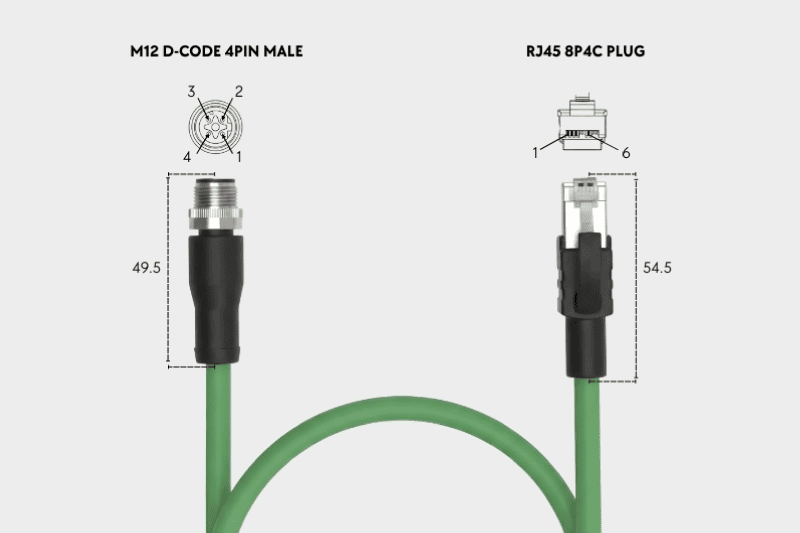
The versatility of M12 connectors extends beyond their basic function. They are available in various coding options, with the D-coded variant being particularly favored for Ethernet applications. These connectors provide capabilities for high-speed data transmission, effectively supporting communication rates up to 100 Mbps. This makes them suitable for real-time data exchange, which is vital in automated systems.
- Designed for harsh environments, M12 connectors are resistant to vibration, dust, and moisture.
- They offer secure locking mechanisms, reducing the risk of accidental disconnections.
- M12 connectors comply with international standards, ensuring broad compatibility across different systems.
The implementation of M12 connectors in Profinet integration supports a more reliable network infrastructure. Their robust construction allows them to endure extreme temperatures and harsh operational conditions, facilitating continuous communication even in challenging environments. This reliability ultimately contributes to enhanced operational efficiency and reduced downtime in industrial processes.
As industries continue to adopt automation technologies, the reliance on M12 connectors for Profinet integration is expected to grow. Their role in ensuring stable and efficient communication networks positions them as a foundational element in the evolution of industrial Ethernet systems.
Technical Specifications and Standards for Reliability
M12 connectors, specifically designed for Profinet applications, are built to meet rigorous technical specifications that ensure reliable performance in industrial Ethernet environments. These connectors typically adhere to the IEC 61076-2-101 standard, which governs the dimensions, electrical properties, and performance characteristics necessary for effective data transmission.
The primary role of M12 connectors in industrial settings is to facilitate robust and secure connections in the face of challenging environmental conditions. Electric performance standards dictate that these connectors should support data transmission rates up to 100 Mbps, utilizing the Cat 5e cabling standard. This capacity allows for efficient communication even in demanding industrial processes.
Key Specifications
- Transmission Speed: Up to 100 Mbps.
- Contact Resistance: Should not exceed 5 mΩ for optimal performance.
- Insulation Resistance: Minimum of 100 MΩ to prevent signal loss.
- Dielectric Strength: At least 1,500 V AC to ensure safety and reliability.
- Environmental Rating: Typically rated IP67, providing resistance against dust and water ingress.
Reliability in M12 connectors is further guaranteed through various tests, which ensure their durability and functionality over prolonged periods. Connectors undergo mechanical stress tests, including vibration and shock assessments, to confirm their robustness in fluctuating environments. These tests help ascertain that the connectors will maintain their integrity even when exposed to harsh conditions such as extreme temperatures and humidity.
Compliance and Certifications
- IATF 16949: Ensures quality management systems in automotive production, applying to connectors used in industrial automation.
- UL Certification: Validates safety and performance standards in electronic components.
- CE Mark: Indicates compliance with European standards for safety and health.
M12 connectors are increasingly essential in industries like manufacturing and energy, where transmission reliability directly impacts operational efficiency. Their compliance with stringent standards reflects the commitment to quality and safety that manufacturers in the field uphold. By conforming to these specifications and regulations, M12 connectors play a pivotal role in the establishment of reliable industrial Ethernet networks.
Integration of M12 Connectors in Industrial Ethernet Systems
M12 connectors are increasingly utilized in industrial Ethernet systems due to their ability to enhance connectivity and ensure reliable data transmission. These connectors are designed with specific coding configurations, such as the D-coded variant, which allows them to support protocols essential for automation. By integrating M12 connectors into industrial systems, businesses can achieve improved communication efficiency and reduced downtime.
The seamless integration of M12 connectors within industrial Ethernet systems facilitates the connection of various devices, including sensors, actuators, and controllers. This architecture supports the deployment of advanced automation technologies, enabling real-time monitoring and control of manufacturing processes. By utilizing M12 connectors, organizations can establish a robust network that transcends traditional communication barriers.
Key benefits of M12 connectors in industrial Ethernet integration include:
- Enhanced data integrity through superior shielding against electrical interference.
- Support for high-speed data transmission, which is crucial for time-sensitive applications.
- Compatibility with existing infrastructure, simplifying upgrades to modern Ethernet systems.
- Rugged design features that promote long-term reliability in demanding environments.
Employing M12 connectors allows organizations to tailor their connectivity solutions to meet specific operational needs. For instance, factories can leverage M12 connectors for synchronized machine-to-machine communication, ensuring that all components operate in harmony. This adaptation plays a vital role in reducing inefficiencies and enhancing product quality.
Furthermore, M12 connectors enable scalability within industrial Ethernet systems. As businesses grow and require additional devices, the modular nature of M12 connectors allows for easy expansion. This flexibility is essential in modern industries, where adaptation to evolving technological demands is paramount.
Additionally, the integration process typically involves standard practices that align with industry specifications. Implementing M12 connectors necessitates proper planning and installation to ensure optimal performance. Training personnel on the handling and maintenance of M12 connectors also supports long-term success in industrial Ethernet applications.
Environmental Resistance and Mechanical Reliability
The reliability of M12 connectors in demanding industrial environments is primarily attributed to their robust design and superior materials. These connectors are engineered to withstand extreme conditions, ensuring that industrial Ethernet systems maintain uninterrupted communication.
M12 connectors feature several characteristics that contribute to their environmental resilience:
- **Ingress Protection Ratings**: Many M12 connectors adhere to IP67 ratings, meaning they are dust-tight and can withstand being submerged in water up to 1 meter deep for a limited time. This feature is crucial in sectors where moisture and particulates are common, such as manufacturing and transportation.
- **Temperature Variability**: Designed to operate effectively in a wide range of temperatures, M12 connectors can function in environments that experience both high heat and extreme cold, typically ranging from -40°C to +85°C. This temperature tolerance is essential for outdoor applications and in facilities with varying operational climates.
- **Vibration and Shock Resistance**: These connectors are constructed to endure mechanical stress, including vibrations and shocks. The locking mechanisms, such as the threaded coupling design, enhance the reliability of the connection by preventing disconnection under duress, which is vital in dynamic environments like factories and rail systems.
The mechanical reliability of M12 connectors further assures their suitability for industrial Ethernet applications. Key mechanical attributes include:
- **Durable Construction**: High-quality materials, such as rugged plastics and corrosion-resistant metals, are used to manufacture M12 connectors. Their durability extends the lifespan of the connectors, making them apt for long-term use in challenging conditions.
- **Robust Termination Options**: M12 connectors provide diverse termination styles that enhance connectivity and allow for flexible installation options. These include options like pre-assembled cables and field-attachable connectors, which simplify maintenance and reduce downtime in industrial applications.
- **Resistance to Electromagnetic Interference (EMI)**: The design of M12 connectors minimizes susceptibility to EMI, which can disrupt data transmission. Effective shielding ensures that signals remain uninterrupted, thus preserving data integrity in environments loaded with electronic noise.
These environmental and mechanical features make M12 connectors an indispensable choice for enhancing the reliability of industrial Ethernet systems. In a landscape where connectivity is crucial, the durability and robustness of M12 connectors ensure seamless operations and the longevity of industrial applications.
Comparison Between M12 Connectors and RJ45 in Industrial Applications
In industrial applications, the choice of connectors can significantly impact system performance. M12 connectors and RJ45 connectors are prevalent in different contexts, yet they serve distinct roles based on environmental and operational requirements.
M12 connectors are specifically designed to withstand harsh industrial environments. Their robust, shielded design ensures protection against dust, moisture, and vibration, factors that are often detrimental in factory settings. The locking mechanism of M12 connectors adds extra assurance that connections remain secure even under intense conditions.
Conversely, RJ45 connectors, while common in office and data center environments, are less suitable for challenging industrial scenarios. Their open configuration leaves them vulnerable to contamination and physical damage. RJ45 connectors lack the protection and mechanical security that M12 connectors provide, which can lead to unreliable data transmission.
Key Advantages of M12 Connectors
- Environmental Protection: M12 connectors feature IP67 ratings, making them ideal for areas exposed to moisture and contaminants.
- Vibration Resistance: The design of M12 connectors allows them to maintain a stable connection even in situations with significant vibrations, an essential factor in heavy machinery.
- Compact Size: M12 connectors offer a smaller footprint, enabling their use in tight spaces where RJ45 connectors may not fit without compromising performance.
Limitations of RJ45 Connectors
- Environmental Vulnerability: RJ45 connectors lack sealing mechanisms, making them susceptible to dirt and moisture ingress.
- Physical Connection Issues: Without robust locking mechanisms, RJ45 connectors can easily disconnect during operation, leading to potential data loss.
- Performance in Extreme Conditions: RJ45 connectors are not designed for extreme temperatures or harsh working conditions, which can impact overall system reliability.
When considering data transmission in industrial Ethernet systems, M12 connectors provide essential advantages that RJ45 connectors cannot match. Industries like manufacturing, energy, and transportation benefit from these distinctions, utilizing M12 connectors to ensure seamless communication and operational efficiency.
Ultimately, while RJ45 connectors may be effective for standard networking applications, M12 connectors are the preferred choice for those requiring durability and reliability in industrial settings. This fundamental difference underscores the importance of selecting the right connector type based on specific application needs.
Practical Applications of M12 Connectors Profinet Integration
M12 connectors Profinet are implemented in various sectors, enhancing operational efficiency and reliability. Their robust design and environmental resistance suit them perfectly for tasks where maintenance and downtime are crucial concerns.
One notable application is in industrial automation. These connectors facilitate seamless communication between controllers, sensors, and actuators in manufacturing processes. For instance, in automotive assembly lines, M12 connectors ensure continuous data flow between robotic systems and central monitoring software. This integration significantly minimizes interruptions, allowing for high-speed production with precision.
- Transportation Systems: Within the transportation industry, M12 connectors play a pivotal role. They are utilized to link subsystems in trains, ensuring that control systems communicate effectively while monitoring conditions such as speed and safety metrics. This connection aids in optimizing performance and maintaining operational safety.
- Energy Plants: In renewable energy applications, specifically wind farms, these connectors are essential for linking sensors that monitor turbine performance. By providing reliable data transfer, they help in maximizing energy production and enabling proactive maintenance protocols.
- Food and Beverage Industry: M12 connectors are also crucial in processing plants where automation and hygiene are paramount. Their resistance to moisture and contaminants makes them ideal for environments demanding strict sanitation standards.
The robust nature of M12 connectors Profinet extends to various other applications, such as in robotics, where they link control systems to actuators while maintaining high-speed communication. Their utility is also seen in municipal services, where they connect smart technology for public safety and infrastructure management. In these scenarios, reliability and quick data transmission are essential for operational success.
In pharmaceutical production, M12 connectors assist in the integration of automated equipment to ensure precision during the manufacturing of medications. Their durability in harsh environments guarantees uninterrupted data logging and system monitoring.
The versatility of M12 connectors Profinet allows for their use in diverse industries, demonstrating their adaptability and importance in modern automation systems. As industries evolve towards smarter solutions, the integration of these connectors will continue to demonstrate their immense value in enhancing connectivity and operational reliability.
Installation and Maintenance Best Practices
Implementing M12 connectors Profinet in industrial environments requires meticulous attention to installation and maintenance. Proper procedures ensure both reliability and longevity of the connectors in demanding settings.
To begin with, ensuring the compatibility of cables and connectors is crucial. Following the manufacturer’s guidelines is essential when selecting the correct cable types and pin configurations. Using the suitable Category cables, such as Cat 5e for M12 connectors, will optimize performance and maintain data integrity.
Proper installation techniques can significantly reduce the likelihood of issues later. The following practices are recommended:
- Clean all connector surfaces before assembly to avoid contamination that may affect connectivity.
- Use the appropriate tools for securing connections without exerting excessive force that may damage the components.
- Ensure that connectors are tightly secured to prevent environmental factors, such as moisture and dust, from compromising performance.
Once connectors are installed, routine maintenance becomes essential. Regular inspections are necessary to identify any wear or damage. Key aspects to focus on include:
- Checking for secure connections and signs of looseness.
- Inspecting the cable for signs of abrasion or exposure that could lead to failure.
- Verifying that there are no obstructions or contaminants in the connector ports.
Another important element is adherence to environmental standards. M12 connectors are designed to withstand harsh industrial conditions, but ensuring the installation environment supports these specifications helps prevent premature wear. Factors like excessive vibration, temperature fluctuations, and exposure to chemicals should be monitored closely.
Moreover, documentation of installation and maintenance procedures can provide valuable insights for future maintenance cycles. Keeping records helps track changes and repairs made over time, facilitating more efficient troubleshooting and management of the industrial Ethernet landscape.
Implementing these best practices ensures that M12 connectors Profinet maintain optimal functionality within industrial Ethernet systems. A proactive approach to installation and maintenance significantly minimizes downtime and enhances operational efficiency.
Future Trends in M12 Connectors and Industrial Ethernet
The landscape of industrial connectivity is rapidly evolving, driven by the increasing demand for reliability and performance in operational environments. One significant trend is the continuous advancement in M12 connectors and their integration with Profinet protocols. As industries transition to more automated processes, M12 connectors are being designed with enhanced capabilities to meet the growing requirements of industrial Ethernet.
Future developments in M12 connectors are expected to focus on several key areas, including:
- Increased Data Transmission Speeds: As factories and production lines implement more advanced technologies, there is a demand for faster data rates. New iterations of M12 connectors are likely to support higher data transmission speeds, facilitating real-time data exchange and improving overall system efficiency.
- Enhanced Environmental Protection: Future M12 connectors are anticipated to feature even better protection against harsh conditions. Technologies to resist dust, moisture, and extreme temperatures will ensure that these connectors remain reliable in challenging industrial settings.
- Miniaturization and Compact Designs: The trend toward smaller, more compact machinery will drive the design of M12 connectors. Smaller connectors with advanced features will allow for more efficient use of space in crowded environments while maintaining high performance.
- Integration with IoT Solutions: With the expansion of the Internet of Things (IoT), M12 connectors will increasingly support connectivity with IoT devices. This integration will enable seamless communication between machines, sensors, and cloud platforms, enhancing data analysis and operational decision-making.
- Flexible Configuration Options: The future will see a rise in modular M12 connectors that allow for customization and tailored solutions. This flexibility will accommodate varying application requirements across different industrial sectors.
As industries explore smart manufacturing and Industry 4.0 practices, M12 connectors will play a pivotal role. These connectors must not only provide robust connectivity but also integrate seamlessly with systems that prioritize efficiency and data-driven decision-making. Collaboration between manufacturers and technology developers will be essential to push the boundaries of what M12 connectors can achieve.
Overall, the future of M12 connectors within industrial Ethernet systems is bright. Their ongoing evolution will significantly contribute to advancing automation technologies, making industrial operations more responsive, efficient, and sustainable. The convergence of M12 connectors and emerging technological trends will pave the way for new opportunities and enhanced operational capabilities in various industrial applications.
you would like to receive a quote for any of custom cables or connectors, please do not hesitate to contact us by sending an email to sales@readytogocables.com or calling in the USA this phone number (682-325-1944).