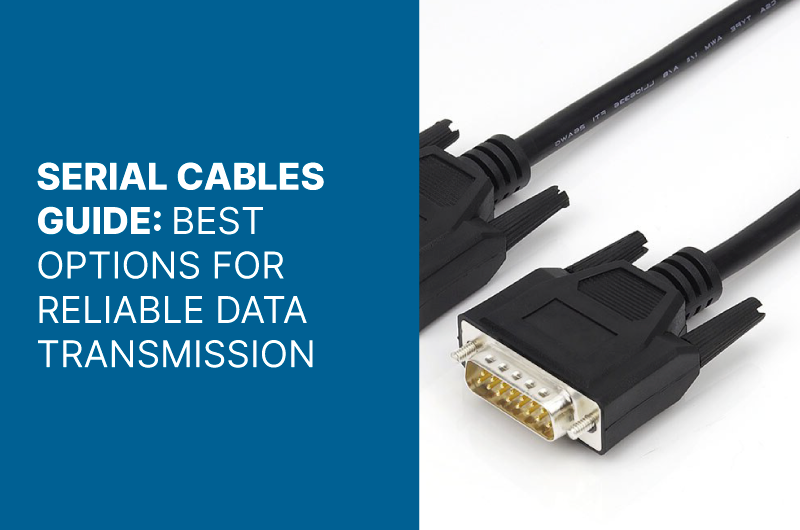
Serial cables are essential components for data transmission between devices. They facilitate communication in various applications, from industrial automation to telecommunications. This guide explores different types of serial cables, including RS232 cables, and discusses their advantages. It also provides insights on selecting the right cable for specific needs, ensuring reliable and efficient data transfer.
Overview of Serial Cables
Serial cables play a vital role in data communication, connecting various electronic devices efficiently. Their sequential data transmission allows for simpler wiring and reliable connections across multiple applications.
Basic Principles of Serial Communication
Serial communication involves transmitting data in a sequence, bit by bit, over a single channel. This method contrasts with parallel communication, which sends multiple bits simultaneously over several channels. The key concepts include:
- Data Transmission: Bits are transmitted one at a time, which helps maintain signal integrity over long distances.
- Signal Synchronization: A clock signal is used to ensure that the sender and receiver are aligned, allowing for accurate data interpretation.
- Protocol Compliance: Different protocols (e.g., RS-232, RS-422, RS-485) govern how data is formatted, transmitted, and interpreted.
Advantages of Using Serial Cables
The use of serial cables offers several advantages, making them preferred choices for many applications:
- Improved Reliability: The single-wire transmission minimizes the risk of data degradation due to less interference and crosstalk.
- Longer Distances: Serial cables can effectively transmit signals over greater distances than parallel cables, which often face limitations.
- Simplified Structure: Fewer wires contribute to easier installations and troubleshooting, as well as reduced costs associated with complex cabling systems.
- Compatibility: Many serial cables can interface with legacy devices, making them versatile for modern and historical systems alike.
This combination of features and advantages makes serial cables indispensable in various sectors, including industrial automation, telecommunications, and networking. Their ability to facilitate reliable data transmission underpins countless operations across technology-driven environments.
Types of Serial Cables
Various types of serial cables exist to meet specific communication needs and to facilitate different applications. Each type has its unique characteristics and advantages, making them suitable for various contexts.
RS-232 Cables
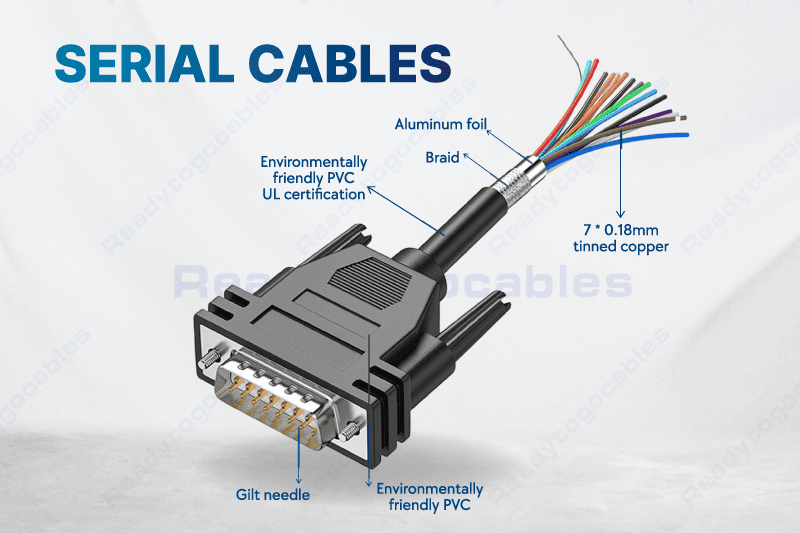
RS-232 cables are one of the most widely recognized types of serial cables. They are designed for short-distance communication and are commonly used to connect peripheral devices like modems, printers, and mice to computers. Typically utilizing 9 or 25-pin connectors, RS-232 supports asynchronous communication.
- Characteristics:
- Packet format includes start and stop bits, which ensure data integrity.
- Standard data rates can reach 20 Kbps over distances up to 50 feet.
- Applications:
- Legacy systems and embedded devices.
- Point-of-sale systems and industrial equipment.
RS-422 Cables
RS-422 cables are optimal for long-distance communication and feature differential signaling, which significantly reduces electrical noise. This makes RS-422 ideal for high-speed data transfers and connections that require longer cable runs without sacrificing quality.
- Characteristics:
- Support data rates of up to 10 Mbps over distances of approximately 4,000 feet.
- Utilizes a two-wire configuration for differential signaling.
- Applications:
- Control systems in automation and industrial environments.
- Long-distance networking solutions and telecommunication applications.
RS-485 Cables
RS-485 cables enhance the capabilities of RS-422 by enabling multi-drop communication. This means multiple devices can communicate over a single pair of wires, making it ideal for complex network setups.
- Characteristics:
- Support data rates of up to 10 Mbps over distances of 4,000 feet.
- Robust against noise and designed for multi-point configurations.
- Applications:
- Building automation systems and IoT devices.
- Data acquisition systems requiring multiple sensor inputs.
USB to Serial Adapters
USB to Serial adapters bridge the gap between modern USB ports and traditional serial communication devices. These converters allow legacy devices to connect to contemporary systems that lack serial ports.
- Characteristics:
- Compact and easy to use, offering plug-and-play functionality.
- Typically supports RS-232 protocol, making it versatile for many devices.
- Applications:
- Connecting older peripherals to new computers.
- Facilitating communications in embedded systems and development projects.
Applications of Serial Cables
Serial cables are used across various industries and applications due to their reliability and effectiveness in data transmission. Their versatility makes them suitable for numerous technological solutions.
Industrial Automation and Control
In industrial settings, serial cables play a vital role in connecting programmable logic controllers (PLCs), sensors, actuators, and other automation devices. They enable real-time monitoring and data acquisition, facilitating efficient process control. The use of RS-485 cables is particularly common in these environments because they support long-distance communication and multiple devices on the same bus.
Telecommunications and Networking
Serial cables are fundamental in telecommunications infrastructure. They connect modems, routers, and terminals, thus allowing various communication protocols to function effectively. RS-232 and RS-422 cables are extensively used to maintain reliable connections over different distances, ensuring that data, voice, and video signals are transmitted seamlessly across networks.
Computer Networking and Legacy Systems
In computer networking, serial cables link legacy devices to modern networks. Many older systems still rely on RS-232 connections for data transmission. USB to serial adapters often facilitate this connection, helping maintain compatibility in environments where new technologies are integrated with older hardware.
Embedded Systems and Programming
Serial cables are invaluable in embedded systems, providing a means of communication between microcontrollers and peripheral devices. They are essential for programming microcontrollers and debugging applications. In many cases, engineers use serial connections to upload code and monitor system performance in real-time.
Choosing the Right Serial Cable
Selecting the appropriate serial cable is crucial for ensuring effective data transmission and reliable communication between devices. Several factors must be considered to make the right choice, including communication protocols, cable length, shielding, and connector types.
Understanding Communication Protocols
Different devices utilize various communication protocols, and it is essential to align cable specifications with these protocols. Common protocols include:
- RS-232: Ideal for short-distance connections, typically used for serial communication with devices such as modems and printers.
- RS-422: Suitable for longer distances and higher speeds, enhancing noise resistance through differential signaling.
- RS-485: Supports multi-device communication, making it perfect for complex network environments in industrial settings.
- USB: Used to connect modern devices to legacy serial devices through USB to serial adapters.
Evaluating Cable Length and Shielding
The physical length of the serial cable has significant implications for signal integrity. Longer cables may experience signal degradation, leading to communication errors. Key points to consider include:
- Avoidance of excessively long cables unless necessary; opt for the shortest practical length.
- Use high-quality cables designed for longer distances, which often include enhanced shielding.
- Evaluate the environment where the cable will be used, as high levels of electrical noise necessitate better shielding.
Selecting the Proper Connector Type
Choosing the right connector is vital for compatibility between different devices. Some common connector types include:
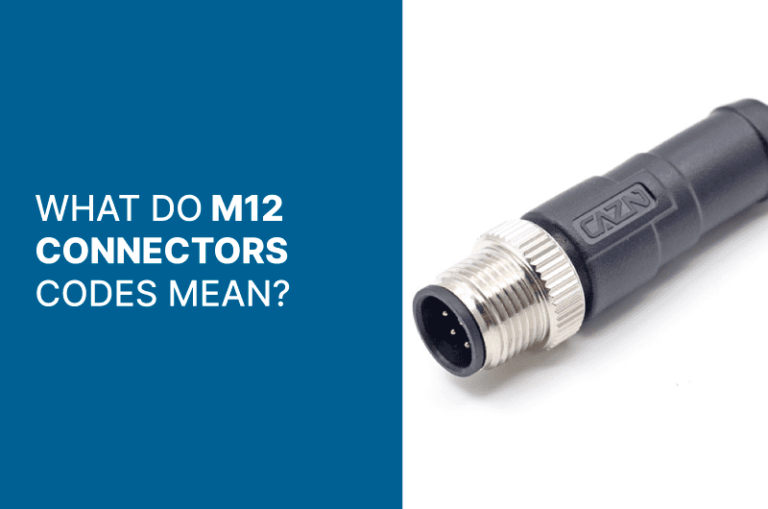
- DB9 and DB25: Commonly used for RS-232 applications.
- RJ45: Often used with RS-485 connections.
- USB connectors: Essential for connecting to modern USB ports.
Ensuring that the selected connector matches the device’s input is crucial for establishing a successful connection.
Ensuring Signal Integrity and Reliability
Maintaining the quality of the signal is critical for effective data transmission. Factors to consider include:
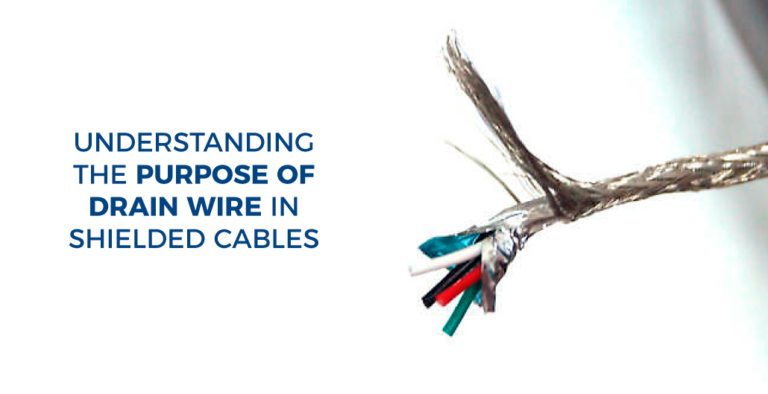
- Use of shielded cables to minimize electromagnetic interference, especially in industrial environments.
- Regular maintenance checks to identify wear and ensure optimal performance of the cable.
- Consideration of the environment—temperatures, humidity, and physical obstructions can affect cable performance.
Ensuring these elements are addressed will contribute to reliable data transmission and overall system efficiency.
Frequently Asked Questions
This section addresses common inquiries regarding serial cables, particularly focusing on RS232 cables and their integration within modern technology. Understanding these FAQs can help clarify essential aspects of using and maintaining serial cables effectively.
Common Concerns About RS232 Cables
RS232 cables have been a staple in serial communication for decades. However, users often face specific concerns, such as:
- Limited Distance: RS232 cables typically support effective communication up to 15 meters (50 feet). Beyond this, signal degradation can occur, making these cables less effective over longer distances.
- Data Rate Limitations: While RS232 can handle rates up to 20 Kbps, this might not suffice for high-speed applications. Users may need to consider alternative protocols for faster data transfer.
- Compatibility Issues: With many systems modernizing to USB, integrating RS232 with newer technologies can pose challenges, requiring adapters or converters.
Maintaining Compatibility with Modern Devices
As technology progresses, ensuring compatibility between RS232 cables and modern devices is crucial. The following methods can aid in achieving compatibility:
- Utilize USB to Serial Adapters: These adapters serve as a bridge, allowing RS232 devices to connect with USB ports, facilitating seamless communication.
- Check Device Drivers: Updated drivers can enhance compatibility and performance, especially when interfacing legacy systems with current hardware.
- Consult Manufacturer Specifications: Understanding the specifications of both the modern device and the RS232 cable can prevent connectivity issues.
Tips for Preventing Data Transmission Errors
Data integrity is essential in any communication system. To minimize errors when using serial cables, consider the following:
- Ensure Proper Shielding: Using well-shielded RS232 cables helps protect against electromagnetic interference, maintaining signal integrity.
- Avoid Excessive Lengths: Stick to recommended cable lengths to prevent attenuation and data loss.
- Regularly Test Connections: Periodic testing can identify potential issues before they lead to significant transmission problems.
Best Practices for Industrial Settings
In industrial environments, the proper use of serial cables is vital for operational efficiency. Adopting specific best practices can enhance performance:
- Use Quality Cables: Invest in high-quality RS232 cables built for industrial applications, as these will endure more demanding conditions.
- Implement Cable Management: Properly organize and secure cables to minimize the risk of damage and interference from other machinery.
- Regular Maintenance: Conduct routine inspections and maintenance on cable connections and devices to ensure ongoing reliability and performance.
Final Thoughts on Serial Cables
The importance of serial cables in modern communication technologies cannot be overstated. They serve as the backbone for data transfer in various applications, enabling effective communication between devices. Understanding their role and future potential is essential for making informed decisions in both industrial and commercial settings.
Key Takeaways for Optimal Use
When considering serial cables, a few essential points must be highlighted:
- Protocol Compatibility: Ensuring that the selected cable aligns with the communication protocols used is paramount for seamless operation.
- Quality Matters: The quality of the cable significantly impacts data integrity. Investing in high-quality cables enhances performance and reduces transmission errors.
- Length Considerations: Longer cables may result in signal degradation. Choosing the appropriate length is crucial for maintaining reliable communication.
- Environmental Factors: In industrial settings, cables must withstand environmental stresses, including temperature variations and electromagnetic interference.
Future Trends in Serial Communication Systems
The landscape of serial communication is continuously evolving. Emerging technologies and increasing demand for efficient data transfer methods are shaping the future of serial cables. Some key trends include:
- Integration with IoT: As the Internet of Things (IoT) expands, serial cables will play a vital role in connecting smart devices, enhancing automation capabilities.
- Enhanced Data Rates: Advances in materials and engineering are leading to cables that support higher data rates, catering to the needs of modern applications.
- Sustainability Initiatives: There is a growing emphasis on eco-friendly materials and manufacturing processes, which may influence the production of serial cables.
- Greater Versatility: New hybrid cable designs are emerging, combining the strengths of traditional serial cables with newer technologies to offer enhanced functionality.
If you would like to receive a quote for any of custom cables or connectors, please do not hesitate to contact us by sending an email to sales@readytogocables.com or calling in the USA this phone number (682-325-1944).