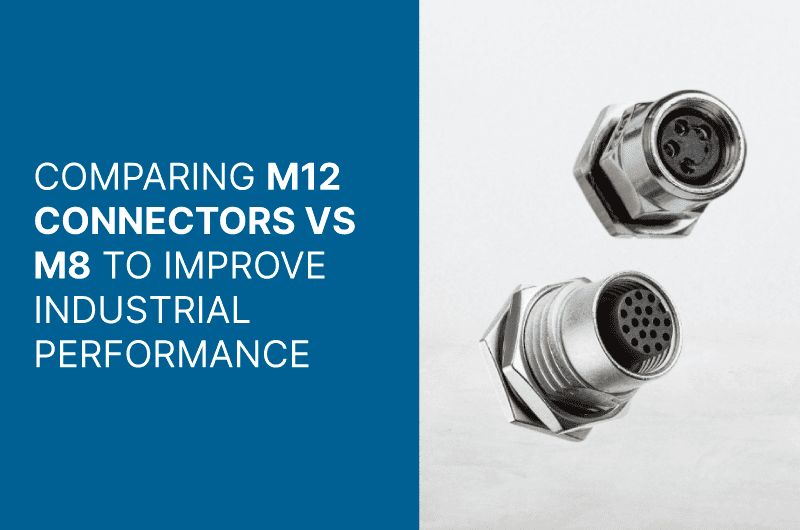
Comparing M12 connectors and M8 connectors is essential for optimizing performance in industrial settings. Understanding their differences will aid in selecting the right connector for specific applications. This article examines both types, highlighting their features, capabilities, and suitability for various industrial automation connectors. Insights will support informed decisions that enhance efficiency and reliability in industrial applications.
Overview of Comparing M12 Connectors and M8 Connectors
This section provides a foundation for understanding the distinctions between M12 and M8 connectors, focusing on their key features, characteristics, and design differences.
Key Features of M12 Connectors
M12 connectors are recognized for their robustness and versatility in various industrial applications. They typically feature:
- A diameter of 12 mm, providing a secure fit for demanding environments.
- Multiple pin configurations, often ranging from 3 to 12 pins, which accommodate complex signal and power requirements.
- Superior IP ratings (often IP67 and higher), ensuring exceptional resistance to dust and moisture.
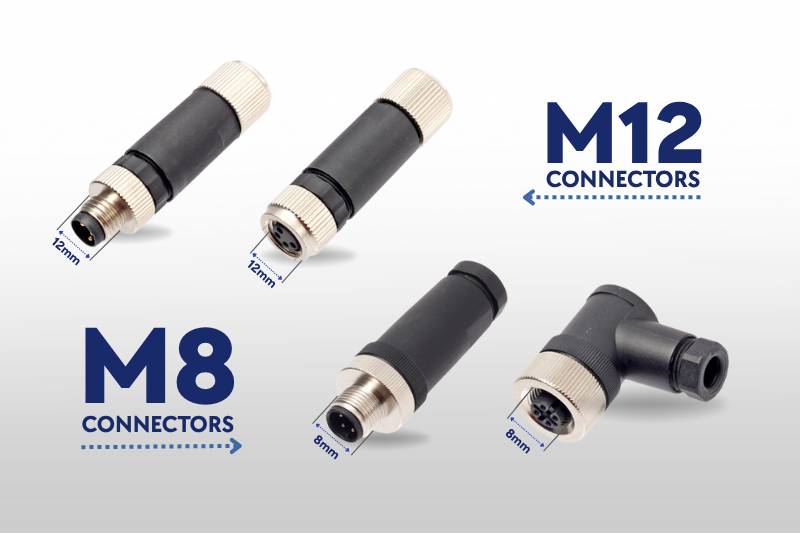
Main Characteristics of M8 Connectors
In contrast, M8 connectors are smaller and designed for applications where space is limited. Their defining characteristics include:
- A compact 8 mm diameter, allowing integration into tighter spaces.
- Standard configurations typically offer 3 to 4 pins, suitable for simpler applications.
- IP67 rating, providing adequate protection against environmental factors, although not as robust as M12 options.
Differences in Thread and Mechanical Design
The mechanical design and the threading of these connectors show notable distinctions. M12 connectors utilize:
- A thicker thread, which enhances their ability to withstand mechanical stress and vibration.
- A design optimized for high current applications, improving reliability in heavier-duty scenarios.
On the other hand, M8 connectors have:
- A finer thread design, suitable for light to moderate load applications.
- A more compact build, facilitating easier installation in constrained environments.
Electrical and Signal Handling Capabilities
The ability to handle electrical signals and power is critical for connectors used in industrial automation. Understanding the differences between M12 and M8 connectors in this area can lead to more effective designs and implementations.
Current Carrying Capacity of M12 vs M8
M12 connectors are designed to accommodate higher current loads compared to M8 connectors. This is attributable to their larger size and robust design. Specifically, M12 connectors typically support currents up to 16A, making them suitable for heavy-duty applications. On the other hand, M8 connectors generally handle lower currents, ideally ranging from 3A to 5A, aligning them with lighter sensor and actuator applications.
Pin Configurations and Coding Options
The range of pin configurations available is another distinguishing feature. M12 connectors can have up to 12 pins, which provides versatile options for data and power transmission in complex setups. These connectors offer various coding options that ensure compatibility with different systems, facilitating secure connections. In contrast, M8 connectors often feature 3 to 4 pins. This simpler configuration suits specific uses where fewer connections are necessary, such as in sensor applications.
Data Transmission and Power Applications
When it comes to data transmission, M12 connectors are often favored for applications that require robust signal handling. They support high speed and data integrity, crucial for real-time communication between devices. M8 connectors can be effective in specific contexts, primarily where lower data rates are sufficient. Furthermore, M12 connectors are commonly applied in both power and data roles simultaneously, enabling streamlined operations across various machines. M8 connectors excel in applications focused purely on sensor data, delivering reliable performance in compact spaces.
Durability and Protection in Harsh Environments
In industrial settings, ensuring the durability and protection of connectors is vital. M12 and M8 connectors are designed to withstand extreme conditions, but their performance can vary significantly based on specific environmental factors.
IP Ratings and Environmental Resistance
The Ingress Protection (IP) ratings of connectors indicate their resistance to dust and water. M12 connectors typically boast higher IP ratings, such as IP67, IP68, and IP69K, which allow them to function effectively in wet and dusty conditions. This makes them suitable for applications exposed to frequent cleaning or harsh outdoor environments. Conversely, while M8 connectors often reach IP67, their lower ratings may limit their use in the most demanding scenarios.
Resistance to Mechanical Stress and Vibration
Another critical aspect of durability is the connectors’ resistance to mechanical stress and vibration. M12 connectors are designed to endure heavy-duty applications and can bear significant force without compromising performance. This robustness is essential in sectors where equipment is subject to constant vibrations, such as manufacturing and construction. M8 connectors, while adequate for sensors and small actuators, may experience greater wear under intense conditions, impacting their reliability over time.
Materials and Build Quality for Industrial Automation
The construction materials and overall build quality significantly affect a connector’s durability. M12 connectors are often made from high-grade metals and reinforced plastics that offer superior strength and resistance to corrosion. In contrast, M8 connectors are generally lighter and may use more economical materials, making them less ideal for extreme industrial environments. Ensuring the right choice of materials is crucial for maintaining long-term functionality in automation systems.
Installation and Space Considerations
Proper installation and consideration of space are critical aspects when choosing between M12 and M8 connectors. Factors like size, mounting options, and connector assembly play a significant role in ensuring optimal functionality in various industrial settings.
Size Impact on Available Space and Mounting Options
The size of connectors can greatly influence available space for installation. M12 connectors, while robust, require more room due to their larger diameter. This can limit placement in tight spaces, making them less suitable for compact designs. In contrast, the M8 connectors are specifically engineered for smaller installations, fitting seamlessly into confined areas without sacrificing performance.
Field Wireable Connectors and Cable Assembly
Field wireable connectors offer convenience for installations, especially when customizing cable lengths or adapting connectors on-site. M12 connectors typically provide configurations that make field assembly straightforward, minimizing downtime. Meanwhile, M8 connectors also offer wireable options, allowing for quick modifications in the field, which is essential for maintaining operational efficiency.
Panel Mount and Right Angle Configurations
Choosing the correct mounting configuration is vital for both M12 and M8 connectors. Panel mount options for M12 connectors are robust, offering secure installations that withstand mechanical stress. Right angle configurations are available for both types, optimizing space by allowing cables to be routed in limited environments. This flexibility enhances installation processes, ensuring compatibility with various industrial automation applications.
Application Suitability in Industrial Automation
Understanding the application suitability of connectors in industrial automation is essential for achieving optimal performance. M12 and M8 connectors serve different purposes based on their design features and intended use cases.
Use of M12 Connectors in Heavy Duty Applications
M12 connectors are widely recognized for their robustness, making them a preferred choice for heavy-duty applications. Their durability allows them to withstand harsh industrial conditions, such as extreme vibrations and heavy mechanical stress. Common use cases include:
- Interfacing with large machinery and equipment.
- Connecting sensors in manufacturing lines where reliability is crucial.
- Establishing communication links in automated guided vehicles (AGVs).
Their high current carrying capacity and superior environmental ratings further enhance their suitability for such demanding operations.
Common Applications for M8 Connectors in Sensors and Actuators
In contrast, M8 connectors are tailored for more compact and lightweight applications. They are regularly utilized in sensor and actuator scenarios due to their smaller size, which allows easy integration into limited spaces. Key applications often include:
- Connecting proximity sensors on robotic arms.
- Facilitating actuator connections in compact machinery.
- Implementing controls in micro-automation systems.
Despite their compactness, M8 connectors still deliver reliable connections for less demanding environments.
Choosing Between Connectors for Specific Industrial Requirements
Selecting the appropriate connector type requires careful evaluation of the specific industrial application. Factors to consider include:
- Environmental conditions and potential exposure to dust and moisture.
- The required current load and signal complexity.
- Available space for installation and connector orientation.
Both M12 and M8 connectors have distinct advantages and are essential tools in the field of industrial automation.
Performance Factors Affecting Connector Selection
Understanding the performance factors that influence connector selection is crucial for industrial applications. Various elements, including reliability, durability, and environmental considerations, play significant roles in determining which connectors are most suitable for specific operational conditions.
Reliability Under Industrial Automation Conditions
In industrial automation, connectors must maintain reliable performance under demanding conditions. Reliability can be affected by:
- Temperature fluctuations, which can impact the material integrity of connectors.
- Exposure to chemicals and contaminants, necessitating connectors with advanced material properties.
- Frequency of connection and disconnection, which can wear down connectors over time.
Impact of Connector Durability on System Efficiency
Durability is a key factor that directly influences system efficiency. Connectors designed to withstand harsh environments can reduce downtime and maintenance costs. Factors affecting durability include:
- Mechanical strength, which determines how well connectors can handle vibrations and stress.
- Environmental ratings, such as IP ratings, which dictate resistance to dust and water ingress.
- The quality of materials used, which contributes to how long connectors can function effectively.
How Mechanical and Environmental Factors Influence Connector Choice
Mechanical and environmental factors are crucial in determining the appropriate connector type. Considerations that affect this decision include:
- Application-specific requirements, such as size limitations or exposure to extreme temperatures.
- Potential mechanical shocks and vibrations that connectors may experience in particular installations.
- The expected service life of the connector, which can guide investment decisions related to initial costs versus long-term reliability.
The cost and availability of industrial automation connectors play a crucial role in the decision-making process. Understanding the pricing and accessibility of both M12 and M8 connectors helps in selecting the right component for specific applications.
Cost and Availability of Industrial Automation Connectors
Price Comparison Between M12 and M8 Connectors
When evaluating industrial automation connectors, one of the primary considerations is their price. Generally, M12 connectors tend to be more expensive than M8 connectors. This price difference can be attributed to their robust design and higher pin configurations, which provide greater versatility in demanding applications. In contrast, M8 connectors offer a more budget-friendly option, suitable for less complex systems.
Availability of Connector Products and Configurations
Availability is another important aspect when selecting connectors. M12 connectors are widely available in various configurations and are produced by multiple manufacturers. This ensures that options for specific industrial needs are easily accessible. M8 connectors, while also available, may have slightly fewer variations due to their more specialized use in compact spaces. Both types of connectors can typically be sourced from major industrial supply distributors.
Long-Term Benefits and Maintenance Considerations
Investing in high-quality connectors leads to long-term benefits, especially in terms of reliability and maintenance. M12 connectors, despite their higher initial cost, are designed for rugged environments, potentially reducing the frequency of replacements. On the other hand, M8 connectors, being more affordable, can be a cost-effective choice for simple applications, although they may require more frequent maintenance in harsh conditions. Evaluating the trade-offs between cost and longevity is vital for sustaining operational efficiency.
If you would like to receive a quote for any of custom cables or connectors, please do not hesitate to contact us by sending an email to sales@readytogocables.com or calling in the USA this phone number (682-325-1944).